POEMS? That 5-letter word will send shivers down the spines of middle school students. Add in the suggestion of “poetry analysis,” and the moans and groans can be heard throughout the hallways! If all this sounds familiar, I have a few teacher tips to help you boost engagement with poems that middle schoolers actually enjoy!
Emergency ELA Sub Plans
🎁 Join my email list for a free set of my ELA Sub Plans!
There are several different strategies for teaching poetry analysis. The key, of course, is choosing an approach that aligns with the reading and comprehension levels of your class. I’ve included three different lesson units you can try depending on the needs of your ELA classroom.
- Poetry Analysis and Poetic Devices
- Modern Poems for Middle School
- Sample Poetry Unit
Poetry Analysis and Poetic Devices
If you are looking for a fundamental approach to teaching poetry, a great place to start is to analyze and discuss the different poetic devices. Examining each poetic device and having students identify how they are used within poems is a good foundation for a middle school poetry unit. I have successfully used this approach with both 6th grade and 7th grade students.
Because I struggled to find an age-appropriate resource that felt engaging AND practical, I created my own poetry unit from scratch. It is broken down into 8 lessons, covering all of the major poetic devices and finishing with analysis worksheets students can complete independently to demonstrate their understanding. It has been used in thousands of classrooms and is one of my most downloaded resources!
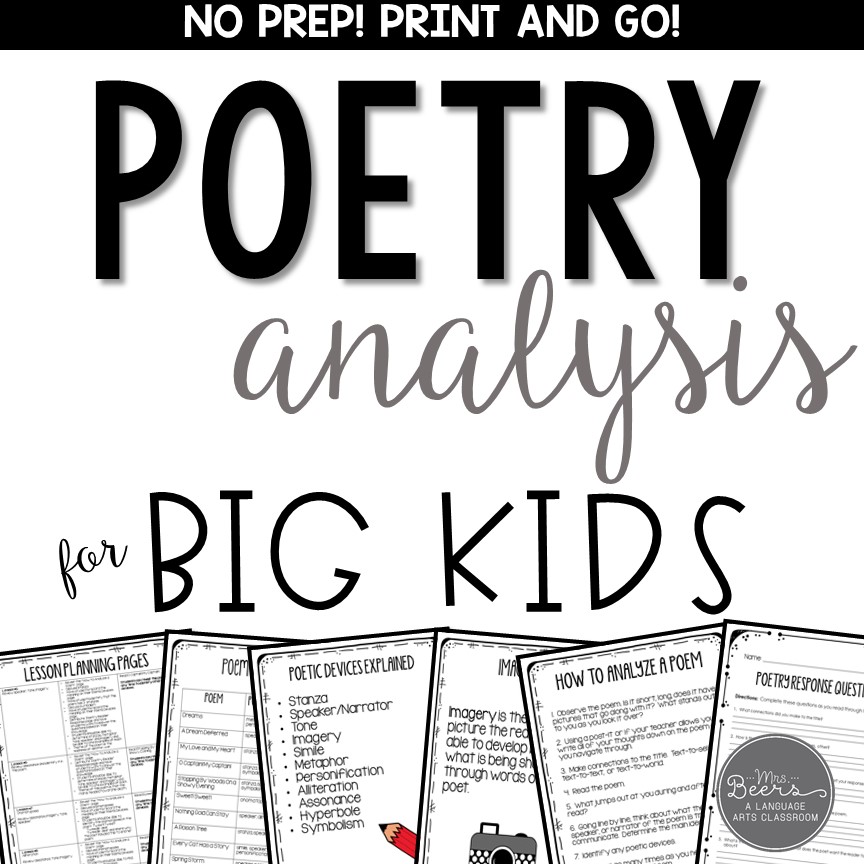
If you are looking for a print-and-go resource to guide you through teaching poetry, you can purchase this unit from my TPT store for only $5.00.
Modern Poems for Middle School
For some students, the mere mention of renowned poets like Langston Hughes, Robert Frost, and Emily Dickinson will have them rolling their eyes. As teachers, we understand the importance of these poets in the history of literature, but one way to increase student engagement is to pivot to modern poems that students can better connect to.
I LOVE to utilize the novel Love That Dog by Sharon Creech. If you have scanned this book and put it back on the shelf because the first pages were complete confusion, give it another shot! I guarantee your students will develop a fondness for poetry and feel greater confidence in their own capabilities to analyze poetry. The key is to select the right poems for middle school, and this book makes for a great poetry unit in the 4th through 6th grades.
I was introduced to Love That Dog by Sharon Creech during a summer reading institute presented by Tanny McGregor. She read the book to us after lunch on each of the four days of the conference. I immediately fell in love with the story of narrator Jack begrudgingly keeping a poetry journal and corresponding with his teacher, Miss Stretchberry. Throughout the short, free verse novel, Miss Stretchberry shares a variety of poems with her students and encourages them to create poetry in the likeness of the famous poems she shares.
My students relate to Jack because they are not all poetry enthusiasts. They connect with his reluctance to write poetry and his frustration with poetry analysis. It makes for good poetry to analyze for middle school students.
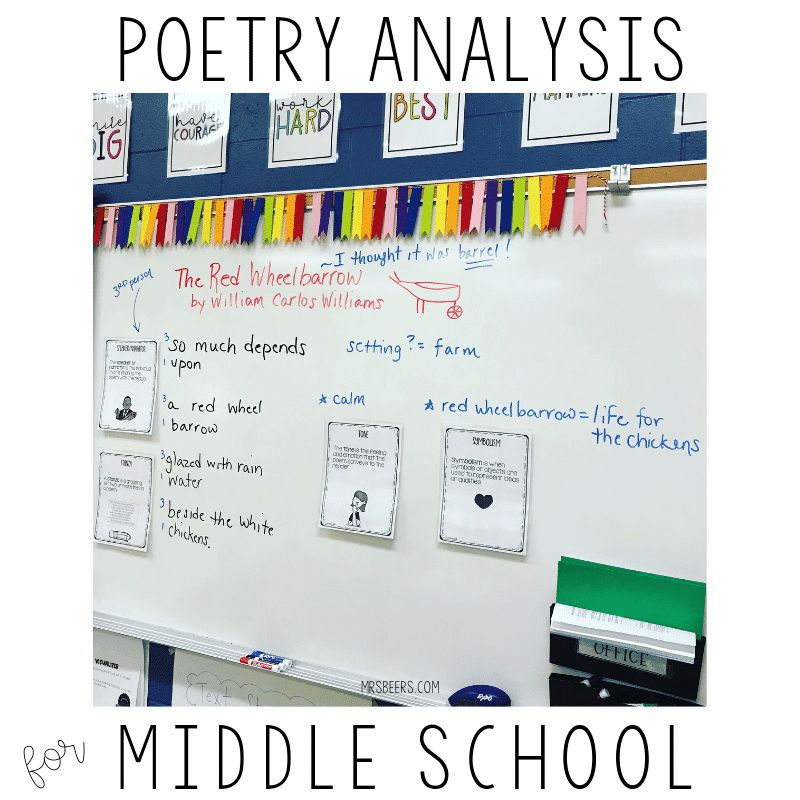
Poems included in the back of the novel Love That Dog are The Red Wheelbarrow by William Carlos Williams, Stopping By Woods on a Snowy Evening by Robert Frost, The Tiger by William Blake, Dog by Valerie Worth, The Pasture by Robert Frost, Street Music by Arnold Adoff, The Apple by S.C. Rigg, and Love That Boy by Walter Dean Myers. If you are short on time, Google these poems because they are the perfect poems for middle school, especially for grades 4-6.
While I teach my students all about figurative language and poetic devices, here is a tool I utilize with each poem we read:
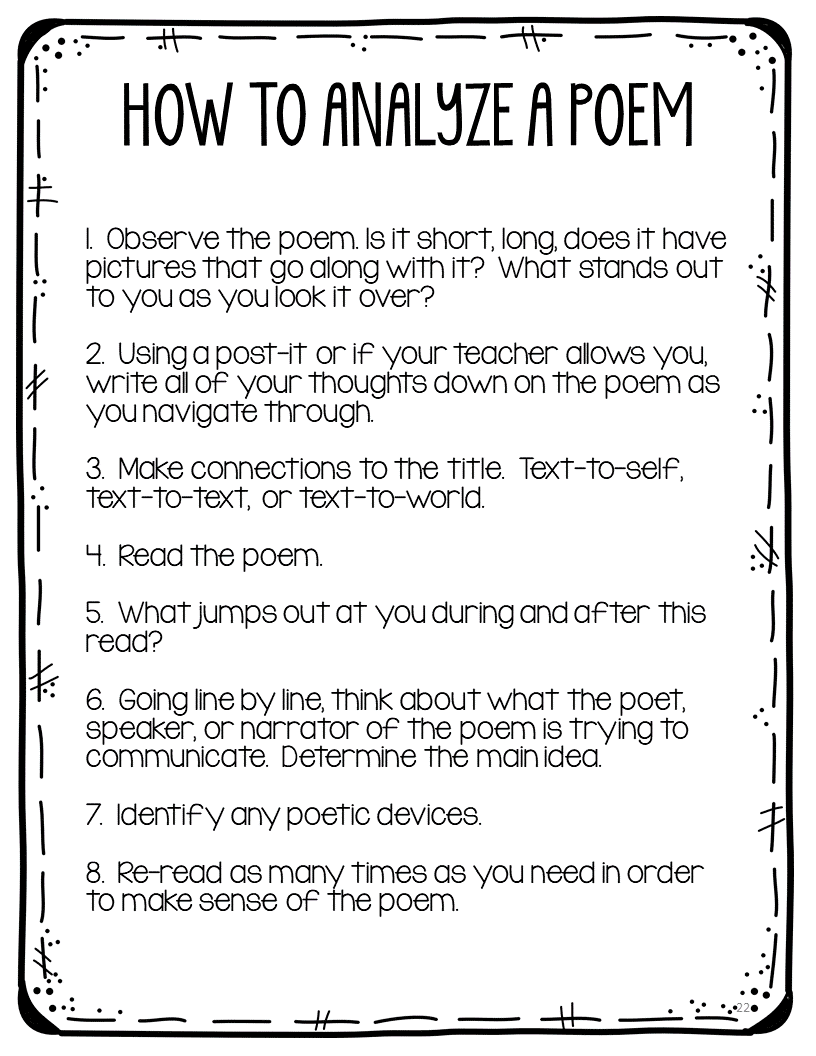
As we read Love That Dog as a whole class read aloud, I teach my students strategies to analyze poems that encourage them to feel more confident reading and understanding poetry.
In addition, I give them the task of becoming the teacher and helping their student, Jack, find his way into accepting poetry and becoming a superstar poet in the process through poetry analysis and journal writing.
Again, this is a different approach to teaching poetry. By using more modern poems and sharing the story of a boy who also dislikes poetry, you can break down some of the engagement barriers that are common in upper elementary and middle school.
I have created a full lesson plan resource around this book that combines poetry analysis and reading comprehension activities. Click on the image below to purchase a copy from my TPT store.

FAQ for Teaching Poetry Analysis
What poetic devices should middle school students know?
Middle school students should be familiar with the terms simile, metaphor, personification, alliteration, imagery, repetition, rhyme scheme, and onomatopoeia. My poetry unit covers each of these with examples and analysis practice built in, so students are applying them to real poems. applying them to real poems.
What does poem analysis look like for middle school?
A good structure for poem analysis in middle school asks students to identify the speaker, tone, and mood, note the use of figurative language and poetic devices, and explain how those choices affect meaning. My free poetry analysis worksheet is a great starting template if you want something students can use right away.
How do I make poetry analysis more appealing to reluctant readers?
Short, accessible poems with strong imagery and a relatable speaker go a long way toward lowering the resistance. I love using Love That Dog by Sharon Creech as a whole-class read aloud, because the narrator Jack is just as reluctant about poetry as most of your students are. When they see themselves in him, the walls come down fast.
Is there a middle school poetry unit I can print and use tomorrow?
Yes! My Poetry Analysis Resource is a complete print-and-go PDF unit with 8 lessons and student worksheets. No prep required!.
FREE PRINTABLE POETRY LESSON PDF
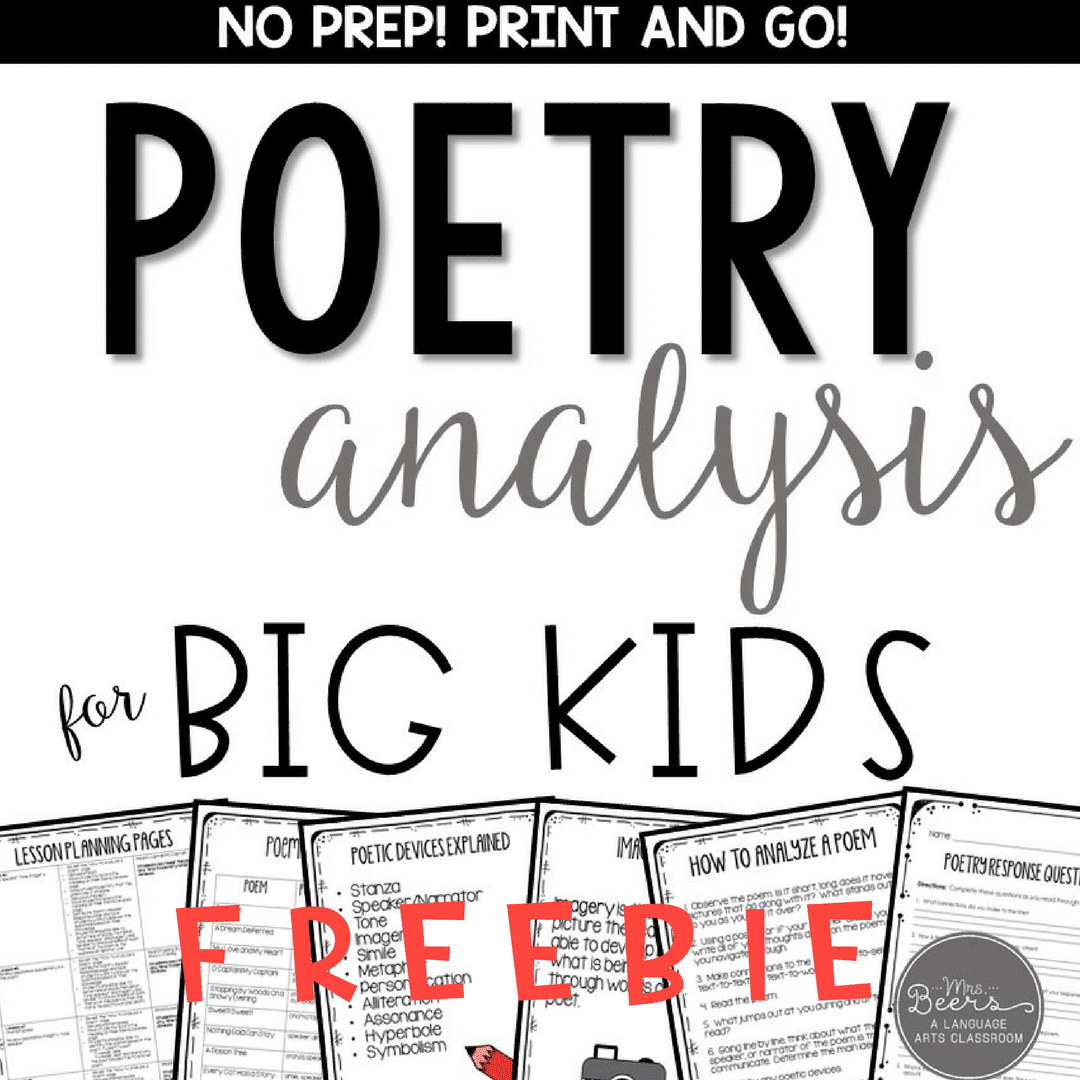
One of the biggest challenges we face as teachers is having enough instructional time to cover subjects like poetry. In some cases, the best we can do is dedicate a handful of blocks to simply introduce students to poetry analysis. If you are looking for ways to review poetry for your standardized tests, the free mini-lesson pdf below offers a template you can build out as needed. It focuses on imagery and includes a sample poem and printable worksheet. Download the PDF by clicking on the image below…
I hope your students learn to love poems as much as mine have! Every group is different, but hopefully you discovered some new and engaging ways for teaching poetry in your ELA classroom!