Struggling to get students to participate in classroom discussions? These creative discussion strategies for middle school ELA help reduce student anxiety and increase engagement during novel studies and reading lessons. Perfect for middle school language arts teachers looking for fresh discussion ideas.
You ask a thoughtful question about the novel your class is reading, and suddenly the room gets very quiet. A few confident students jump in right away, while others stare down at their desks, hoping not to be called on.
The good news is that a few simple discussion structures can completely change the dynamic. When students have clear roles, movement, or low-pressure ways to participate, discussions become far more engaging, and you’ll start hearing from students who usually stay silent.
Here are 10 creative discussion strategies that help increase participation while reducing shyness and anxiety.
1. Silent Discussions
Silent discussions are a fantastic way to involve students who feel uncomfortable speaking in front of the whole class.
Post discussion questions around the room on chart paper or slides. Students rotate in small groups and write their responses directly on the paper. They can also reply to comments left by other groups.
Because students are responding in writing, quieter students often share thoughtful ideas they might not say out loud.
2. The “Stand If You Agree” Strategy
Present a statement related to the text or topic, such as:
- The main character made the right decision.
- Social media does more harm than good.
- The theme of this story is about courage.
Students stand if they agree and remain seated if they disagree.
Once students see how their classmates responded, invite a few volunteers to explain their thinking. This quick movement activity helps students ease into discussion without immediately having to speak.
3. Speed Discussions
This is a simple concept you can use for almost any type of partner work. The biggest hurdle is designing a seating configuration that allows for movement around the room. One option is to include a few standing stations to get more out of your space.
The short time limit keeps conversations focused, and students get multiple chances to practice explaining their ideas.
4. Four Corners Debate
Label the four corners of the room:
- Strongly Agree
- Agree
- Disagree
- Strongly Disagree
After hearing a discussion statement, students move to the corner that represents their opinion.
Students then discuss their reasoning with others in their corner before sharing ideas with the class. Movement adds energy to the lesson and helps students feel more confident sharing their perspectives. Give each group a worksheet with questions that help them defend their stance.
5. One Voice Tickets
This strategy ensures every student contributes at least once. Give each student a participation ticket at the beginning of the discussion. When they share an idea, they place their ticket in the center of the table.
Students know they only need to contribute once, which lowers anxiety while still encouraging participation.
6. Character Roundtables
This discussion format works especially well during novel studies.
Assign each group a character from the story. Students discuss events from the perspective of that character and answer prompts such as
- What does this character want right now?
- What problem are they facing?
- What decision might they make next?
Speaking from a character’s point of view often feels easier for students than sharing their own opinion.
7. Passage Detectives
Each student selects a passage that represents one of the following:
- A surprising moment
- An important clue
- A powerful quote
- A confusing section
- A moment that reveals character
Students read their passage aloud and explain why they chose it, which naturally leads to deeper analysis. You can speed up the discovery process by providing a list of several approved passages.
8. Save the Last Word
Students select a quote from the reading. In small groups, one student reads their quote aloud while the rest of the group discusses its meaning.
After everyone has shared their ideas, the student who selected the quote gets the final word and explains why they chose it.
9. Pass the Question
Students write their own discussion questions related to the text and place them in a container. Students then take turns drawing and answering questions.
When students help create the questions, they tend to feel more invested in the conversation.
10. The Hot Seat
This activity works great IF you can find the right student to volunteer. In this activity, one student sits in the “hot seat” and answers questions as if they were a character from the story.
Classmates ask questions about the character’s choices, motivations, or future decisions. This strategy adds an element of creativity and often leads to lively conversations about character development. Tip: you may want to provide a list of questions to keep things on-topic and moving along.
When discussions start to feel more natural and student-driven, you’ll often find that comprehension, critical thinking, and writing skills improve right along with them.
Turn Novel Discussions into Engaging Novel Studies
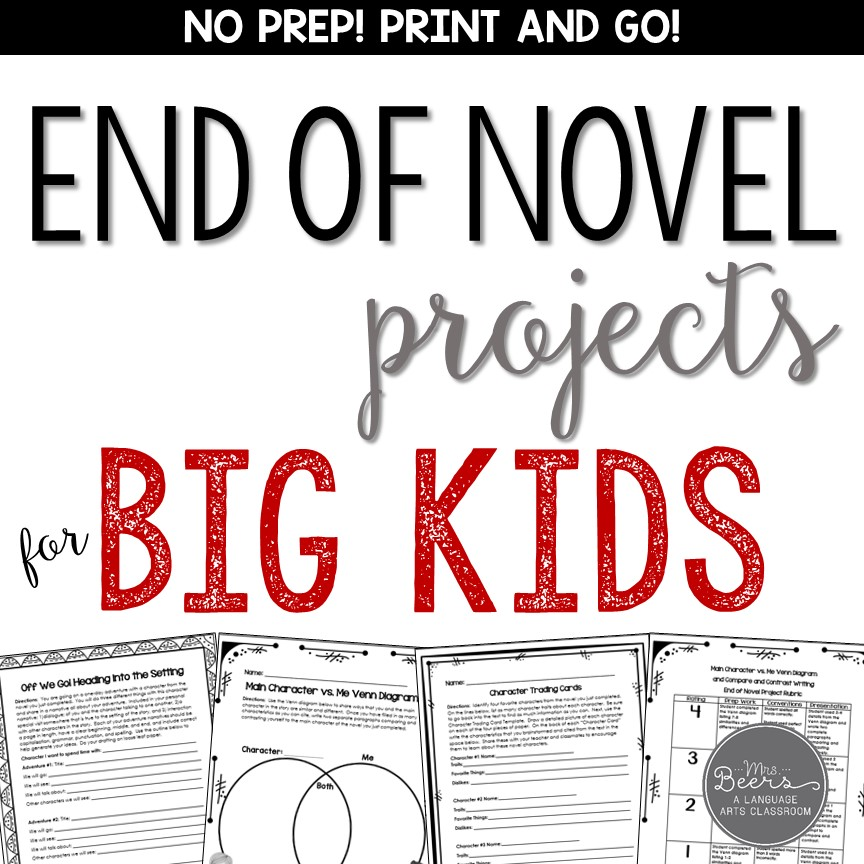
Classroom discussions are a great way to help students think more deeply about a story, but many teachers also like to include a creative project at the end of a novel study. Projects give students the opportunity to reflect on themes, characters, and important moments in the story while expressing their understanding in a more creative way.
If you’re looking for flexible activities that work with any novel, I’ve created a collection of End-of-Novel Projects for Middle School that students always enjoy. These projects allow students to analyze characters, explore themes, and demonstrate their understanding of the story in creative formats such as presentations, visual projects, and written responses.