I am one of those teachers that LOVES reading aloud to my students. I read aloud for a multitude of reasons, but mostly, I LOVE to read to them because they still enjoy being read to. In addition to my love of reading, research shows read-alouds give students…
Emergency ELA Sub Plans
🎁 Join my email list for a free set of my ELA Sub Plans!
- Connect with and have models and examples of various genres for their own personal writing
- Provide them the opportunity to hear fluent reading in order to build their vocabulary
- Improve their listening comprehension
- Enhance visualization skills
Have you ever tried picture books with your middle grade class? They absolutely love them! The funny quotes and obvious messages take the pressure off reading and let them enjoy the story. Since we don’t have much time to cover classroom expectations during the first week, choosing an engaging picture book eases tensions and gives you more time for structured companion activities to assess your class’ strengths.
Here are a few of my favorite books to use as first day read alouds for students in the 4th through 6th grade range, along with my companion activities that enhance the lesson in each…
Read Aloud #1: First Day Jitters
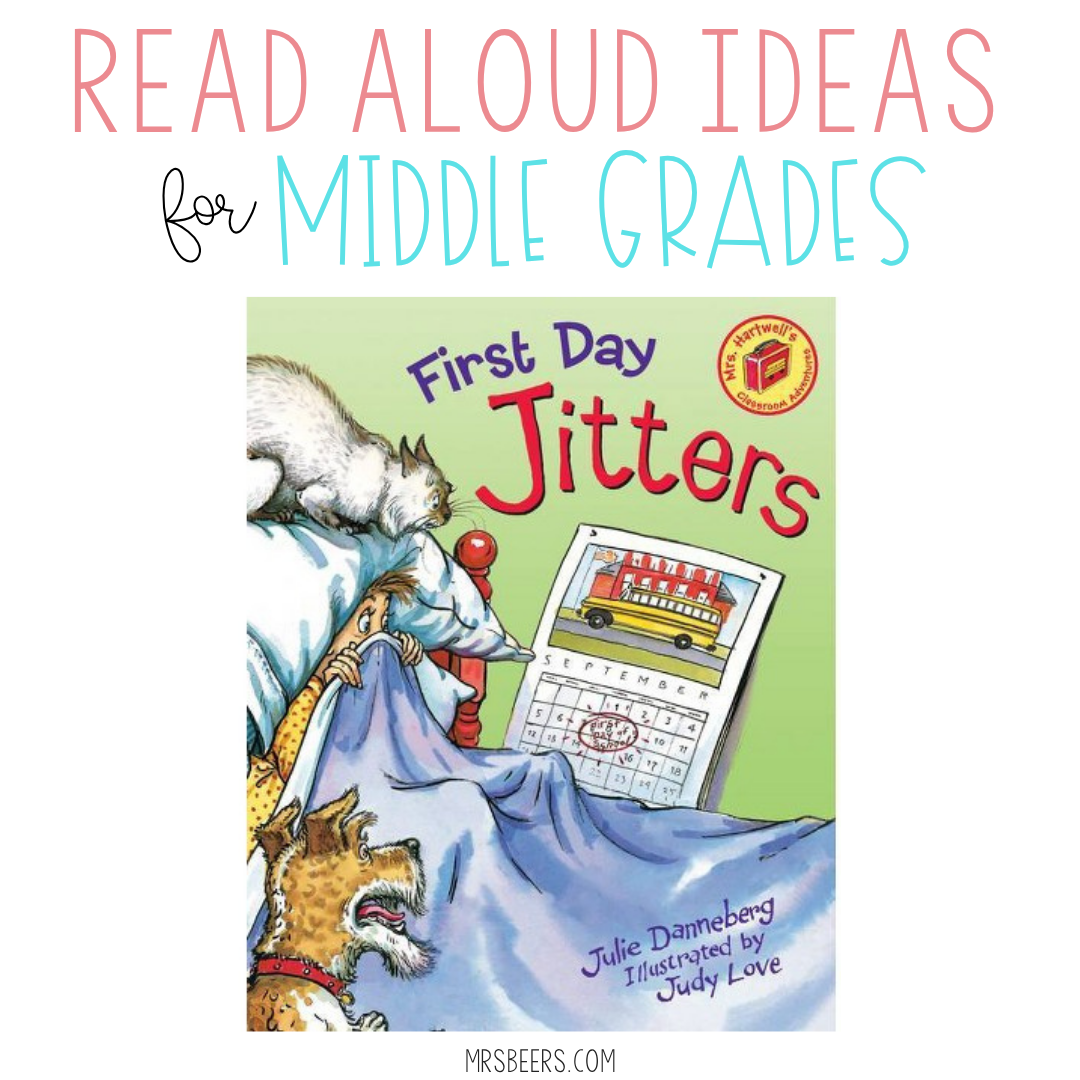
While First Day Jitters is a beloved story in the primary grades, I find my BIG KIDS love it even more! It is a story told in rhyme with excellent illustrations that will have the students wondering and inferring.
Your older students will LOVE this silly picture book because what they infer is completely wrong. Use this fun book for predicting, inferring, or as an icebreaker.
The reader of this book believes, until the very end, that the story’s main character is a little girl who is nervous about her first day of school. The reader finds out at the very end that it is, in fact, the teacher who is nervous to begin her first day.
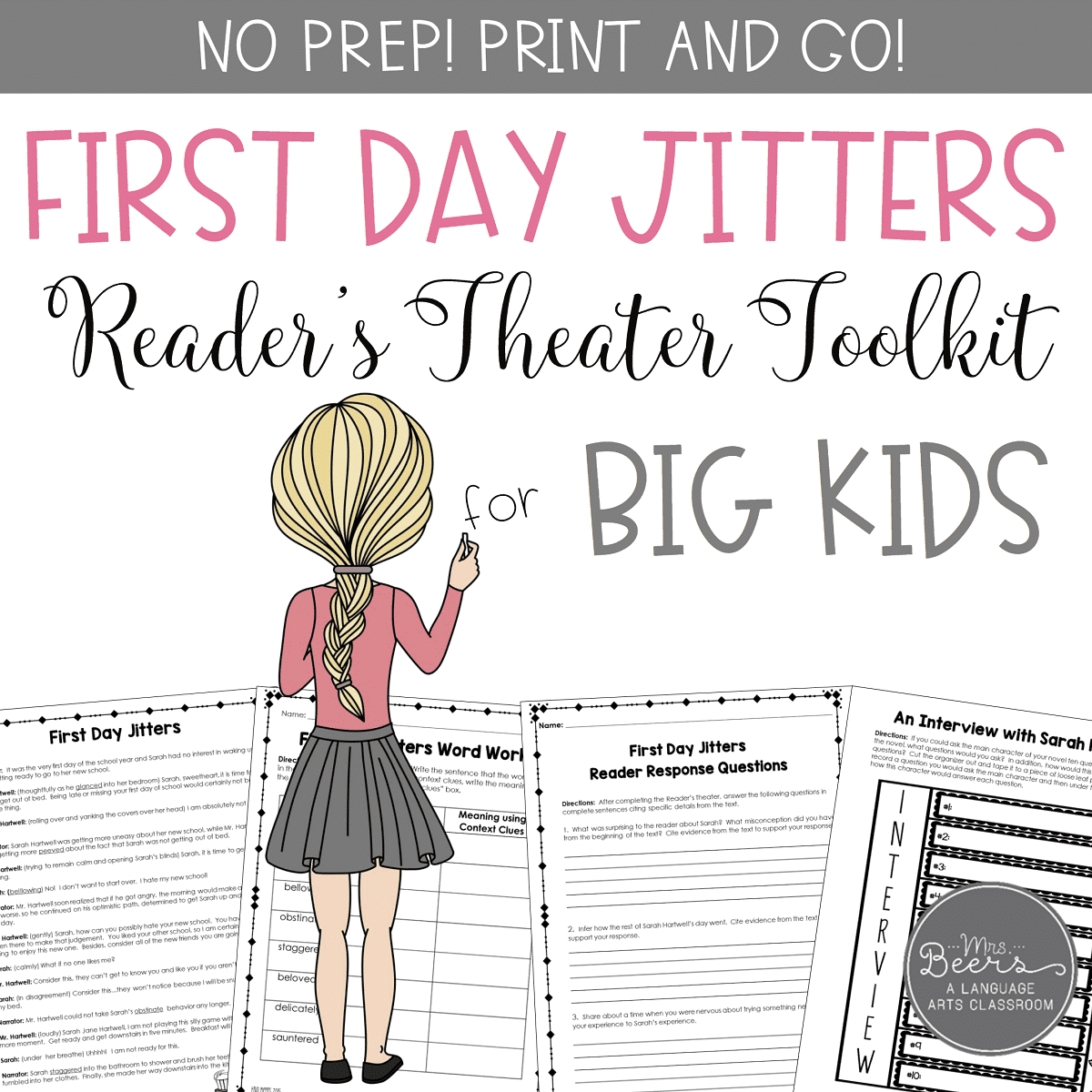
Students love this book because they often don’t consider that a teacher is nervous. This text sparks great narrative writing topics about times when we were nervous but didn’t want to admit it. I created my own reader’s theater extension activity for this “First Day of School” read-aloud. Click the image below to take a peek!
Read Aloud #2: The Day the Crayons Quit
This read-aloud is a fun way to introduce discussions about effort, empathy, and teamwork in the classroom.
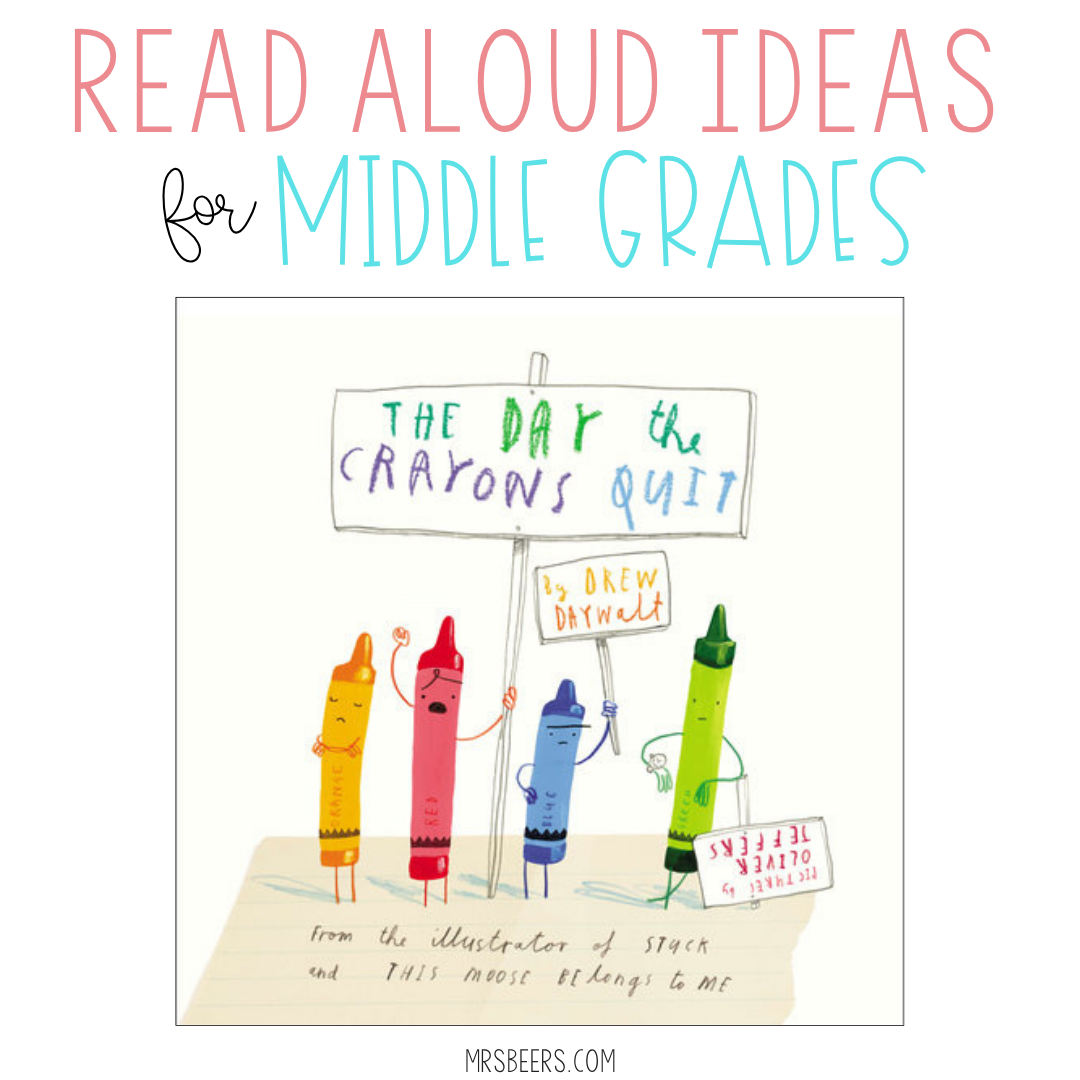
I love reading this story about Duncan’s crayons, which have disappeared from his desk and left him letters explaining why they have gone on strike. They are unhappy for a variety of reasons and want to be used in different ways. This is a good one for back-to-school, since everyone is walking in with shiny new school supplies, but very few of us consider the “feelings” of our creative tools.
The real message, though, is about teamwork and understanding that “your way” may not be the best for those around you. Effort and empathy are important themes in any classroom community, and The Day the Crayons Quit is a fun way to raise awareness about these topics.
To expand on the core lessons in this read-aloud, I created this reader’s theater companion script to give my class the chance to practice (and me assess) their fluency, understanding of story elements, context clue recognition, and short answer writing.

In my creative retake of the story, a student named Brennan is not putting in the effort to complete his art project. His colored pencils take notice and decide that enough is enough; either he puts forth more effort and considers their suggestions, or they may not return.
Both my First Day Jitters and The Day the Colored Pencils Resigned toolkits provide purposeful extension activities you can incorporate in your first days back. Reader’s theater is the perfect tool for providing an early assessment of your students’ reading skills.
Both toolkits include comprehension activities to utilize after reading the scripts. This includes reader response questions, context clue worksheets, and a writing activity for each.
Picture book read alouds might sound like a silly idea for your big kids, but I promise they will be engaged from the start if you choose the right book. Again, the goal here on the first day is to lower their resistance to “working on the first day” and give us, as teachers, the opportunity to observe their work habits and teamwork skills.