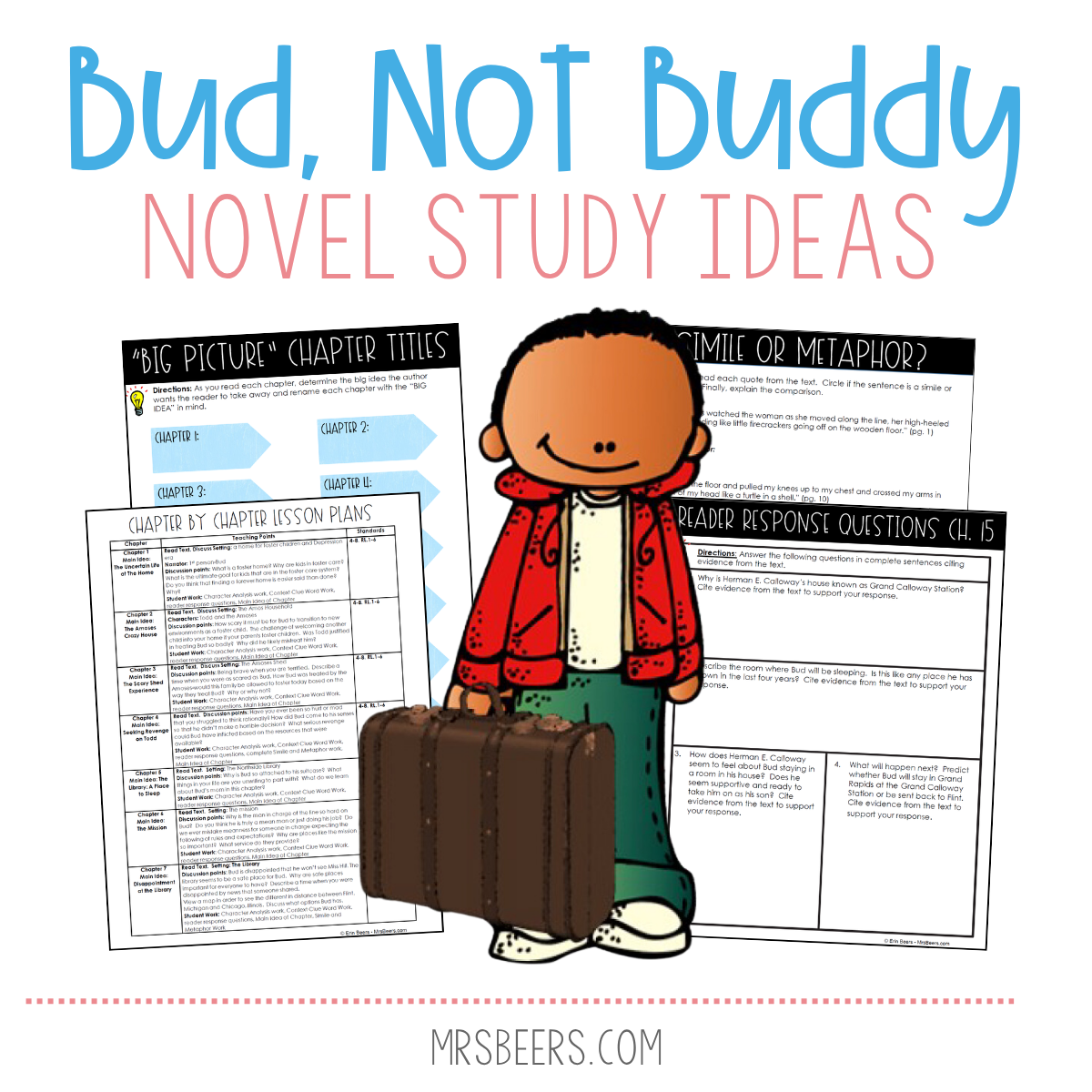
Bud, Not Buddy by Christopher Paul Curtis is one of my favorite novels to teach in middle school because it blends so much history across multiple settings and features a main character your students will cheer for!
Emergency ELA Sub Plans
🎁 Join my email list for a free set of my ELA Sub Plans!
If you’re looking for Bud, Not Buddy lesson plans to help your students dig deeper into this book’s character analysis, historical context, and comprehension, I’ve listed some engaging activities below, along with my complete novel study unit.
Why Bud, Not Buddy Works for Middle School
I’ve taught Bud, Not Buddy several times, and while you might think the Depression-era backdrop and jazz music references might not resonate with today’s kids, I promise your students will love it! Here are some of the reasons it works so well…
Perfect for 4th-6th Grade: The 10-year-old protagonist makes it relatable for upper elementary and younger middle schoolers. The unpredictability of Bud’s journey builds anticipation for each chapter.
Great Depression Setting: The historical elements of the setting make it easy to analyze character actions and how they were likely influenced by the era. Your students get to explore the setting and challenges of this period, as well as an introduction to the foundations of jazz.
Character Resilience: Bud faces plenty of obstacles in his quest, but he keeps inching forward despite setbacks. His adventures make great classroom discussions around perseverance, hope, and finding family in unexpected places.
Page-Turner Plot: Short chapters and fast pacing mean your reluctant readers stay engaged. The adventure keeps them wanting to know what happens next.
Character Suitcase Project
Since Bud carries his own suitcase filled with his important possessions throughout his journey, one easy project is to have your students create a “character suitcase.” They can either draw the contents or collect items from home.

I always add a size limit to character bag/box projects. Distributing paper lunch bags in advance will help you keep the clutter down. Each item should have an obvious connection to the story, and each student gets a couple of minutes to tell us about their favorite item and what it means. From there, you can have them list each item and its significance on a worksheet.
Projects like this are perfect for reinforcing character analysis concepts and helping readers develop greater empathy for the characters.
Michigan Map Activity
Bud’s journey takes him to a variety of places between Grand Rapids and Flint, Michigan. You could easily turn this into a map activity using a printable map of these areas or even create an interactive digital map. This is a great way to dig deeper into the story’s setting, and it helps students visualize the impressive journey Bud experienced.
Setting Analysis and Discussion
While the map activity covers geography, don’t overlook the different settings within the book. Bud experiences dramatically different settings from the Amos household to Hooverville to the mission to the Log Cabin, and each one shapes how he feels and what he learns.
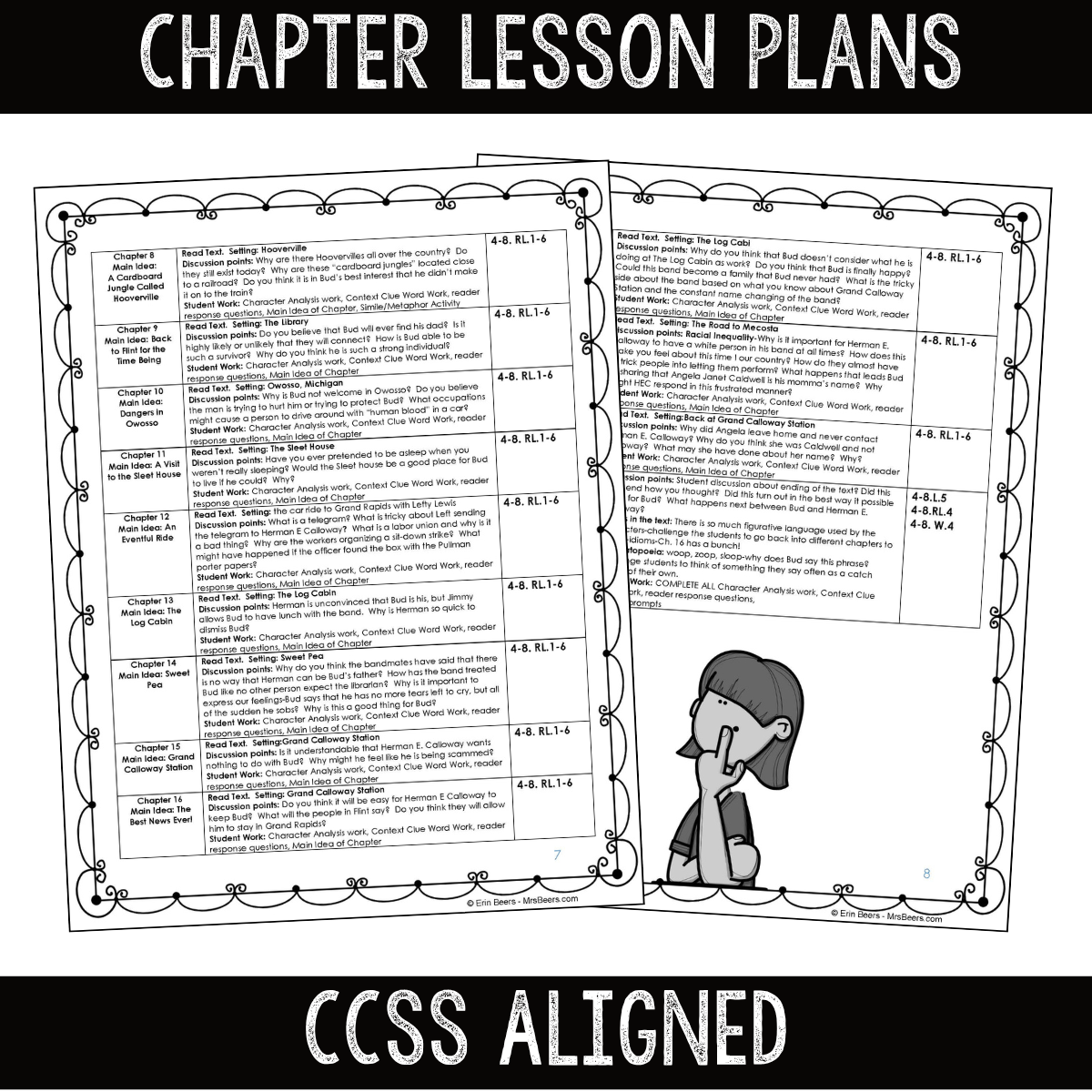
Use discussion questions to help students analyze why setting matters: How does being in Hooverville change Bud’s perspective? What does the Log Cabin represent that other places don’t? Why is finding a safe place so important to Bud’s character arc? The image above shows an example of the chapter-by-chapter lesson plans in my Bud, Not Buddy Novel Study.
These conversations lead to a deeper understanding of Bud’s character and help students see that setting isn’t just “where the story happens”; it shapes who Bud becomes.
Figurative Language: Simile and Metaphor
Christopher Paul Curtis provides plenty of figurative language examples to discuss throughout Bud, Not Buddy. From the opening page, which calls out high-heeled shoes that sound like firecrackers, to powerful comparisons about hope and resilience. Highlighting these for students really helps when we cover the concept in other lessons.
Instead of worksheets that feel disconnected from the book, have students hunt for figurative language in the text itself. Ask them to identify 3-5 similes or metaphors, explain the comparison, and discuss why Curtis chose those particular images. This teaches literary devices through authentic reading, which is ultimately the goal.
My novel study unit includes figurative language worksheets that guide students through this thinking, using specific examples from the text to make the connections meaningful.
My Novel Study
If you are looking for a novel study unit to help you guide your readers through the story, my Bud, Not Buddy unit features chapter-by-chapter lesson plans and comprehension activities. All of my novel studies include the usual reader-response questions and journal prompts, but I also incorporate character analysis, context clues, and story-map worksheets.
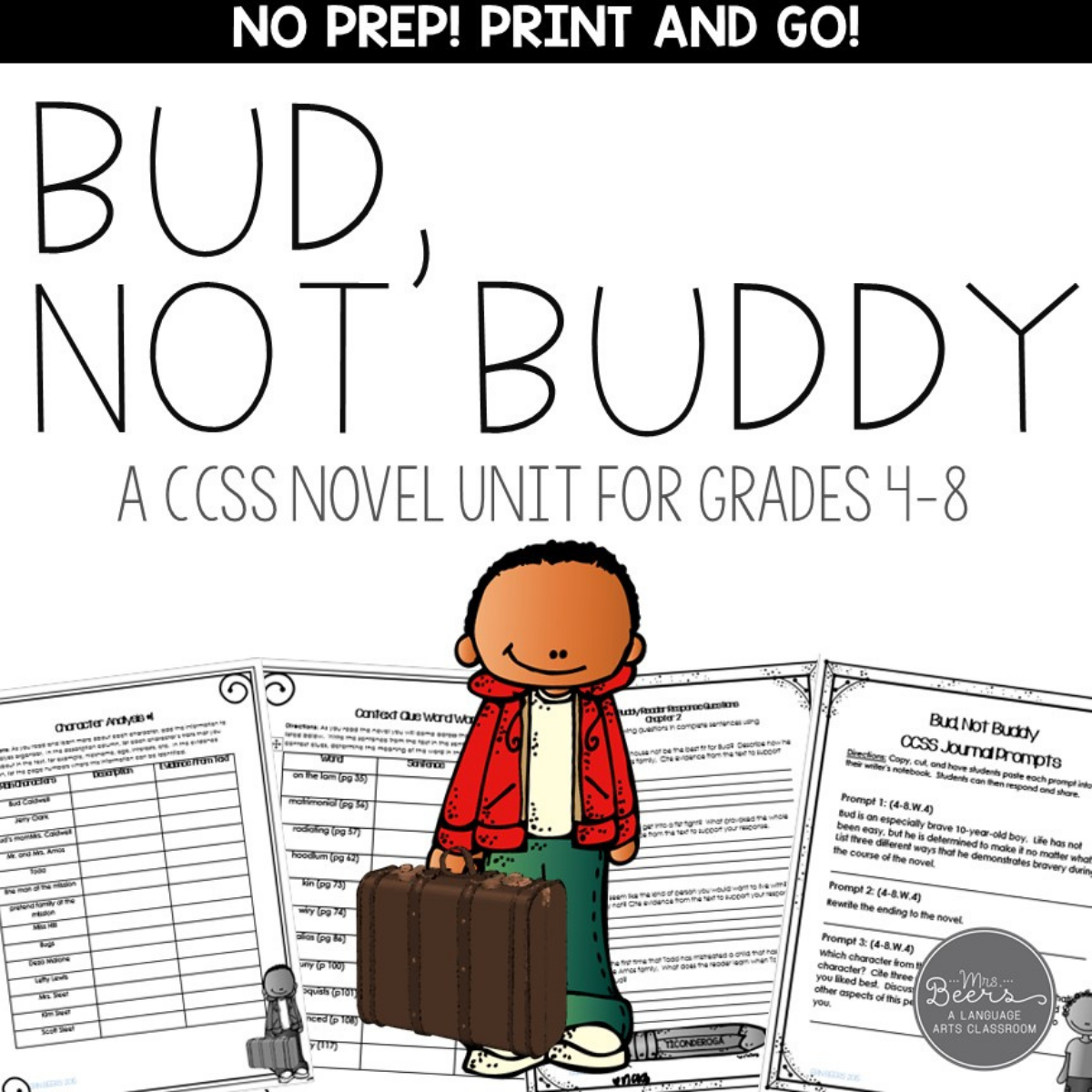
Recently, I added a digital version of this resource for use in Google Classroom. Both versions have the same content, but the digital one allows students to complete the work on their Chromebooks.
See below for the full list of what’s included. Learn more about this novel study here.
- Daily Lesson Plans with Class Discussion Ideas
- Separate PDF and Digital Versions
- Context Clue Worksheets
- Character Analysis Worksheets
- Main Idea Activity
- 23 Pages of Chapter Reader Response Questions
- Story Map Worksheet
- Figurative Language Activity
- 3 Journal Prompts
- Answer Key