“Why do I have to read aloud? I hate reading aloud!” This reaction from a struggling 6th grade reader usually has less to do with hating read-aloud time and more to do with reading fluency.
Emergency ELA Sub Plans
🎁 Join my email list for a free set of my ELA Sub Plans!
A number of years ago, when my school district began our work with Response to Intervention, or RTI, it became abundantly clear that many of our upper elementary students were struggling readers. The data gathered from the DRA and DIBELS assessments, as well as my own baseline data gathered in the first week of the school year, truly changed everything I did as an upper elementary reading teacher moving forward.
It wasn’t that we were clueless about our students’ struggles; we knew they existed, but pinpointing their exact reading levels and the number of words they could read correctly per minute from kindergarten through sixth grade provided invaluable information. With the amazing help of district literacy specialists, we could work together to strategize how to engage these struggling readers, build their confidence, and move them toward becoming fluent and successful readers.
Reading fluency incorporates three main components: speed, accuracy, and prosody, which directly impact comprehension. This isn’t just classroom experience talking, either. The 2024 NAEP data confirmed what many of us already see day-to-day: reading scores for upper elementary and middle-grade students still haven’t recovered to pre-pandemic levels. Fluency is one of the biggest levers we have for closing that gap. Here are the primary strategies I use to make fluency fun for upper elementary students.
Strategy #1: Incorporate Reader’s Theater!
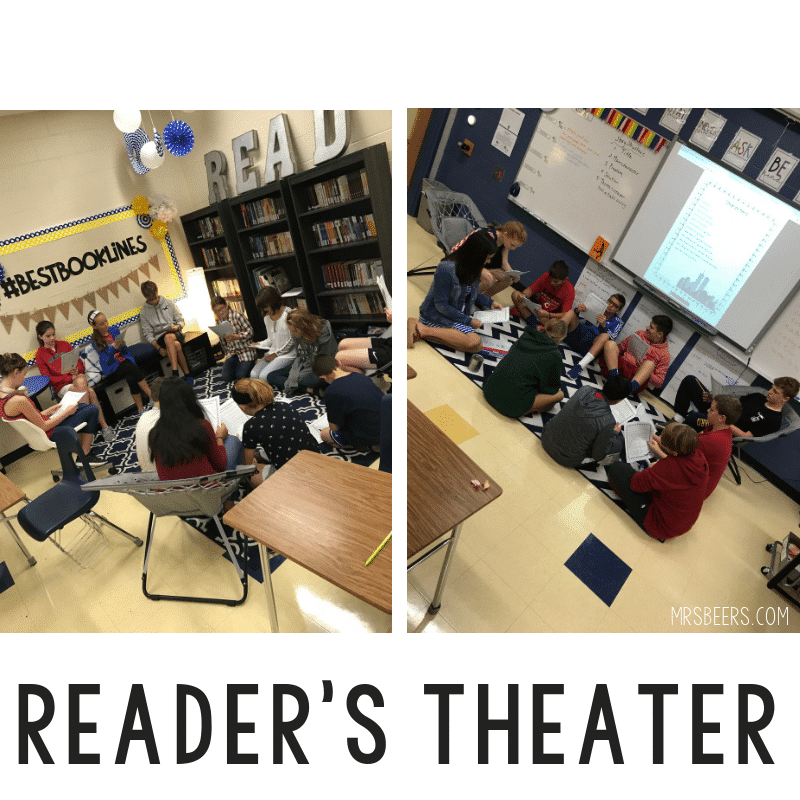
Reader’s theater scripts are a favorite of both my students and me. I LOVE writing them, and they LOVE performing them. Using reader’s theater helps my students build fluency because they read with expressiveness in the words and sentences they read aloud.
Studies by Young and Rasinski found that reader’s theater improves word recognition automaticity and prosody, and a more recent meta-analysis found it has a large overall effect on reading proficiency. Because “performaning” gives students a real reason to reread the same text, it builds fluency without feeling like drill work, which matters most for the students who already dread reading aloud.
While reader’s theater can be hard to incorporate into instruction EVERY week, I try to include it as often as I can. Through reader’s theater, my students are engaged in classroom read-aloud sessions, modeling, developing, or hearing prosodic reading.
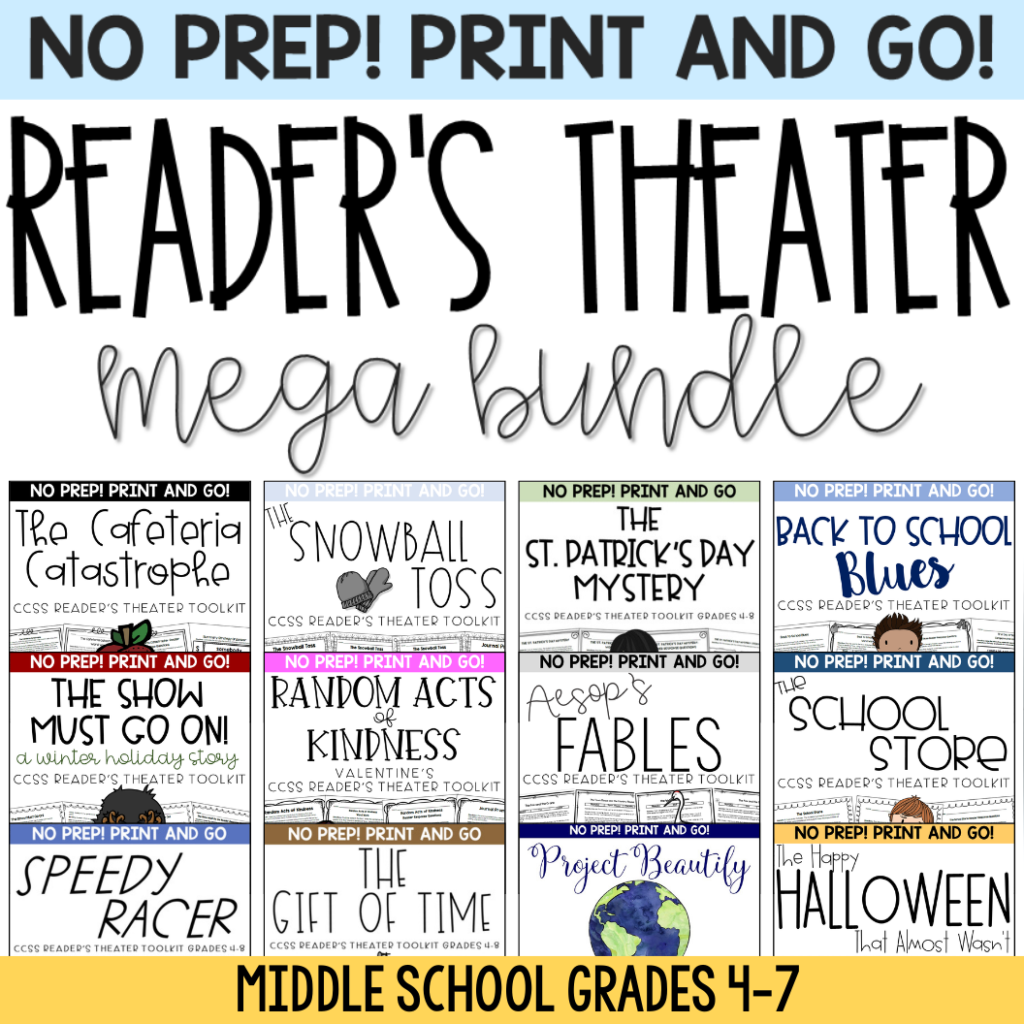
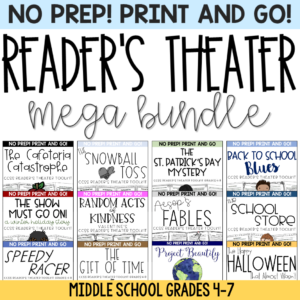
If you want scripts ready to go tomorrow, my Reader’s Theater Bundle includes 12 no-prep fluency scripts built for upper elementary and middle-grade readers, the same kind of repeated-reading practice that the research above supports.
Strategy #2: Shared Reading
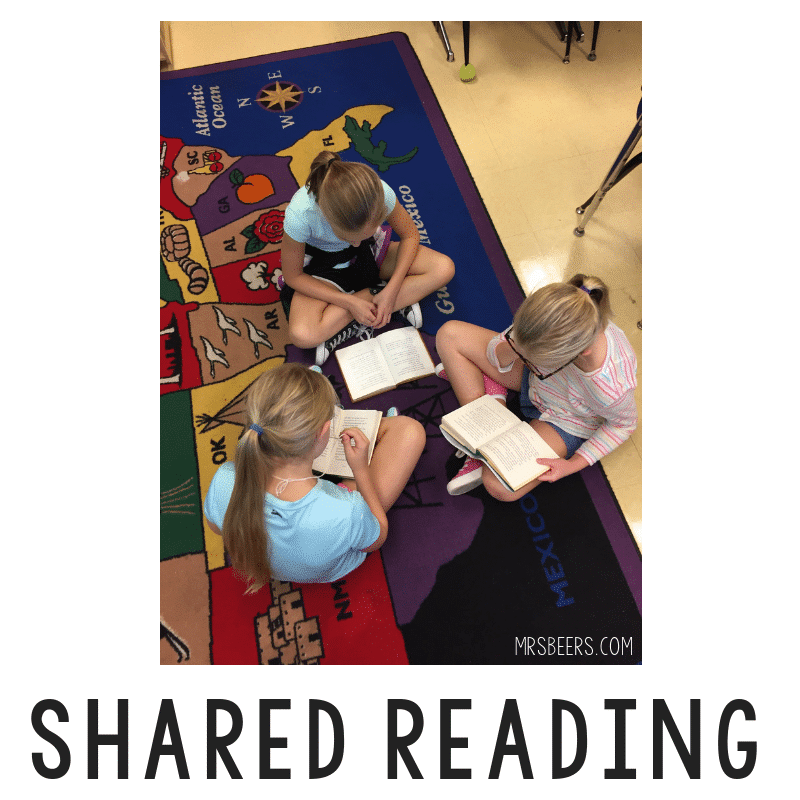
Partner reading is something my students look forward to. They enjoy the opportunity to work together and navigate text. While it is essential that students have opportunities to navigate texts independently, reading with a peer can enhance their fluency. I have my students partner read in a variety of ways.
- I partner up same-level readers to read a text aloud, alternating paragraphs.
- I partner up a high-level reader with a struggling reader and alternate sentences.
- When students are reading text independently, they stop, find a peer, and read aloud their favorite part.
Allow students to sit on the floor, at special tables, under desks, etc., to make partner reading times even more enjoyable. The idea is that text is being shared aloud so fluency practice is at work.
Strategy #3: Reading Pals
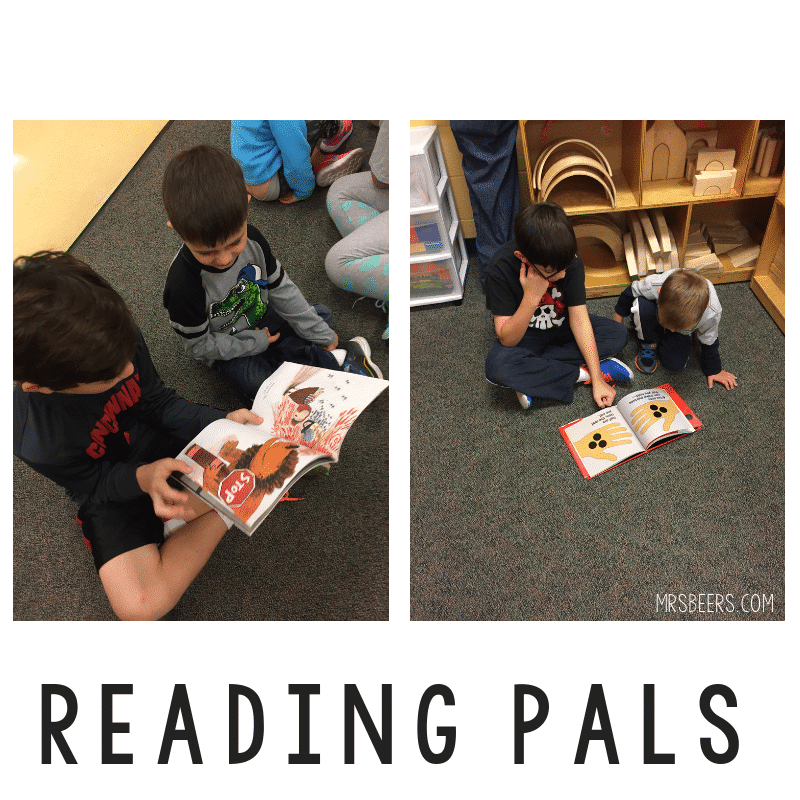
Reading Buddies became a favorite activity for my 6th graders. Every other week, my 6th graders met their first-grade reading buddies in the cafeteria to share stories. My 6th graders would bring two books to read aloud, and their first grade buddies would bring their own book bags/boxes to share stories from. The 30-minute time slot flies. Not only are all students reading or listening to reading, but they are also positively engaged with one another.
While we incorporate some additional story-element work and activities, this is a time slot that all 6th and 1st graders look forward to twice a month. There is so much to be said for the relationships being formed between older and younger learners. Reading Pals not only improves fluency through practice, but it also creates an environment of teamwork and encouragement throughout our community of learners.
Strategy #4: Poetry and Choral Reading
Poetry is typically not something my 6th grade students look forward to studying. One way we navigate poetry is through choral reading. Choral reading can be done with any text, but it works especially well with poems. Choral reading is reading a text in unison as a whole group. When we choral read, strong readers and less confident readers blend in together as we navigate unfamiliar text. I find that it helps my students build fluency, confidence, and motivation to tackle text independently.
We read together because it makes us stronger and more confident when we navigate text on our own.
Strategy #5: Post-Reading Word Work
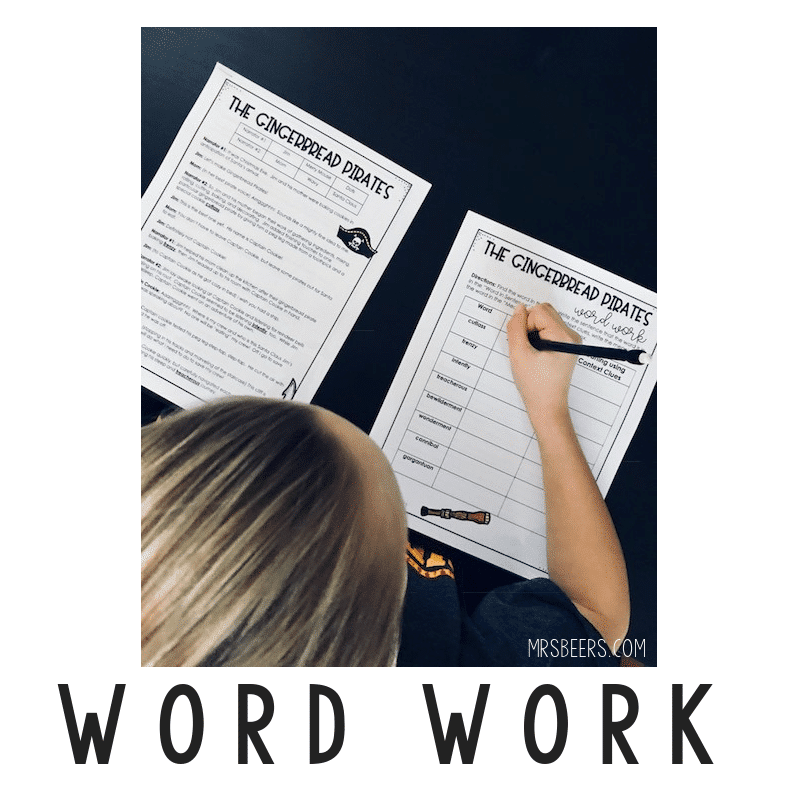
This may seem silly, but friendly competition really inspires and motivates my students. With Speed Spelling, we tackle both studying spelling words and building fluency all at once as students speed-read through their word list.
Because my students have twenty spelling words each week and little studying takes place outside of the classroom, this is a fun way to get eyes on the words. You can pair students and give each 10-20 seconds to read through their list as quickly as possible. The partner that reads through the list most accurately and quickest wins. They don’t have to win anything other than a high five, but they are quickly reviewing their words and reading aloud. WIN! WIN!
When you make word work enjoyable, the complaints and frustrations will truly go by the wayside. I’ve also built out more structured word wall routines if you want a ready-made word wall system to pair with fluency practice.
Strategy #6: Fluency Assessment Checks
You don’t always need a formal assessment to know where a student stands. A simple accuracy check tells you a lot: if a student reads a passage with around 95% accuracy, they can handle it independently. Around 90%, they’ll need support. Below 90%, the text is too hard, and fluency work should happen on an easier passage first.
I keep this rough guide in mind before assigning any independent fluency practice, whether it’s reader’s theater, partner reading, or word work. It only takes a minute or two to check, and it keeps you from accidentally handing a struggling reader something that will just frustrate them further.
By incorporating so many fun ways to build fluency, my students forget that they despised reading aloud at the beginning of the year. Fluency doesn’t build itself overnight, but small, consistent practice adds up fast.
If you’re looking for a print-and-go way to kick off a new fluency routine, check out the Reader’s Theater Bundle in my TPT store.