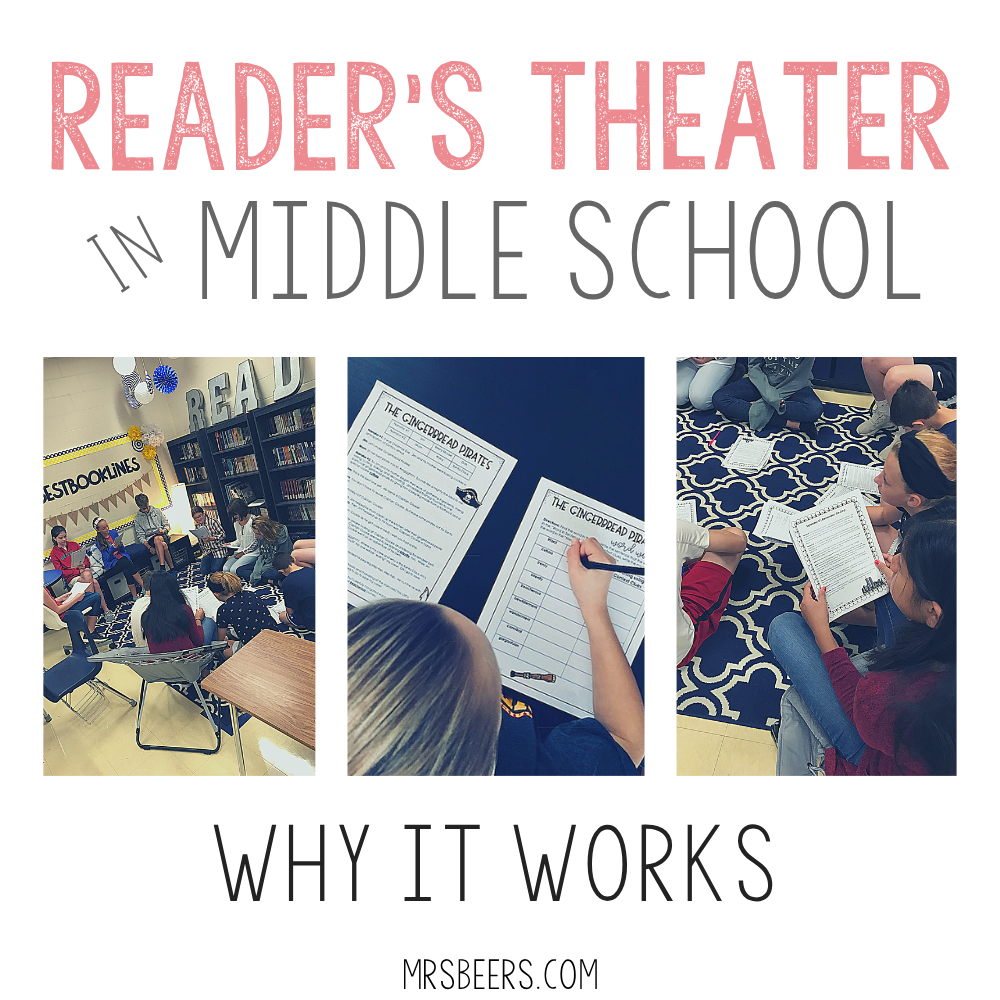
Reader’s theater is the perfect tool to add to your middle school ELA toolbox for so many reasons: it is interactive and highly engaging, enhances student fluency, targets and enriches reading comprehension, and strengthens vocabulary. Here are the top reasons why I decided to make it a regular activity in my ELA classroom…
Emergency ELA Sub Plans
🎁 Join my email list for a free set of my ELA Sub Plans!
#1: Reader’s Theater Engages ALL Readers!
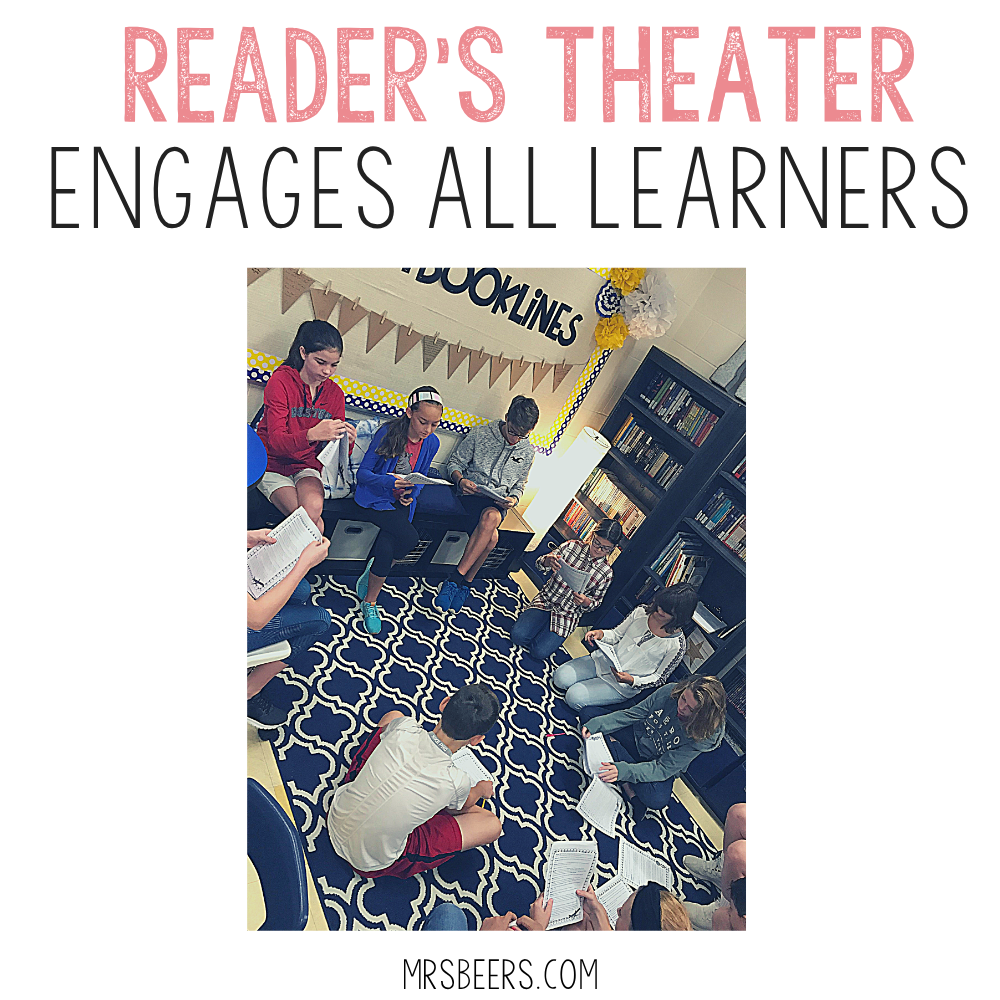
Sitting at a classroom desk for most of a school day can be tough on anyone, let alone on active middle school students. Getting students up from their seats by performing a reader’s theater script is a perfect way to add movement to student learning. In addition, when students are given a character role that allows them to transform and interact with peers, they are much more engaged in their learning.
#2: Reader’s Theater Enhances FLUENCY!
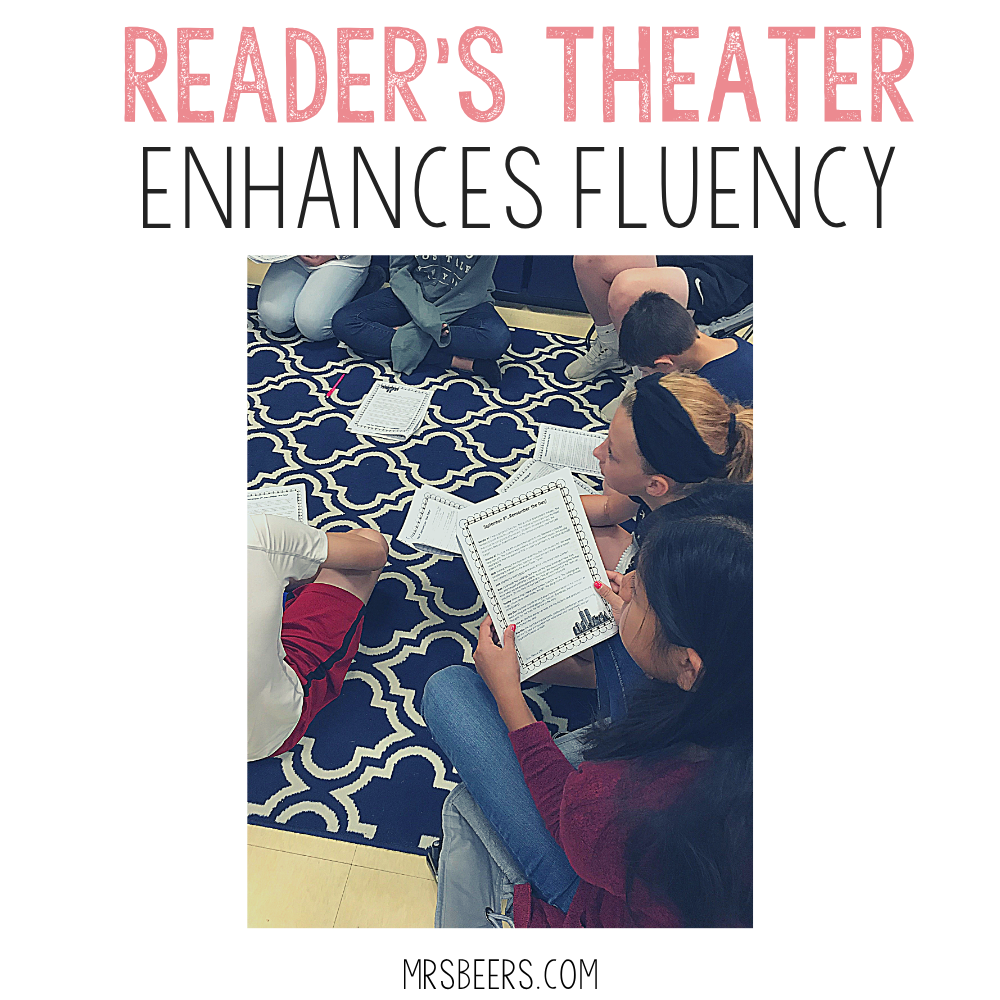
Each year tends to begin the same, with a great deal of data gathering and analysis to figure out just where our students are as learners in our classrooms. One year in particular, I found that as I began administering DRAs and weekly fluency assessments, a majority of my 6th graders were struggling readers. Fluency was low, comprehension was limited, vocabulary was a weakness, and many of my students struggled to connect with the texts they were reading.
While there were so many components of reading to tackle, I found that the easiest part was to get reader’s theater scripts in their hands that they would LOVE, and give them the opportunity to perform. By reading scripts aloud multiple times, student fluency has improved.
#3: Reader’s Theater Strengthens COMPREHENSION!
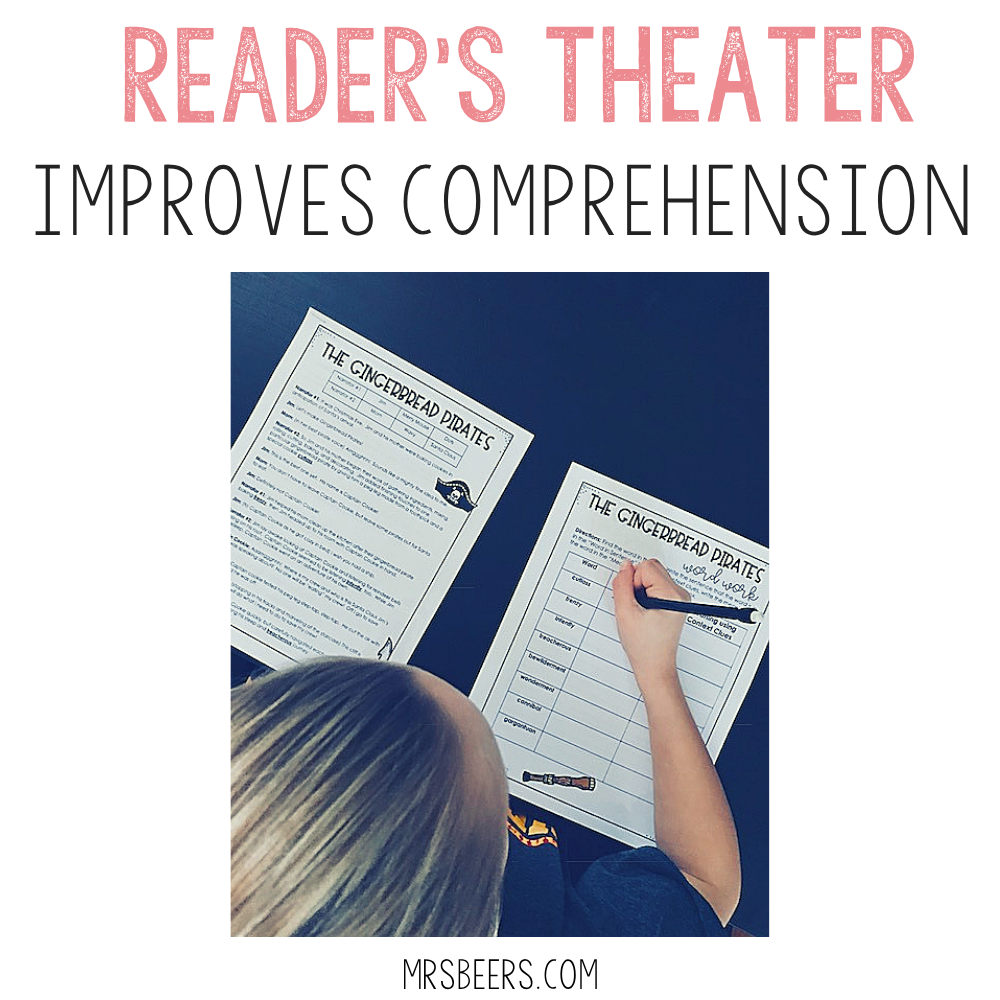
When students have text that makes them feel connected, they don’t want to put it down. Reader’s theater scripts are the perfect classroom resource to encourage thoughtful reflection and strengthen comprehension when reader-response questions are included or discussed with the script.
How to Use Reader’s Theater in Your Classroom
Here are the simple steps I used to implement reader’s theater in my 6th grade classroom. You can find my full implementation guide here.
- Find an engaging script that is ideal for my middle school learners.
- Copying the passage and extension activities for students.
- Give students 5 minutes to preview the passage and determine which character they might like to perform
- Based on class size, I might have two different groups perform the same play.
- Display the characters/parts on a whiteboard in the classroom for students to see.
- Pull craft sticks with student names to make the character selection fair. As I pull a student’s name, they get to pick which part they would like to perform.
- I then write each student’s name next to the character/part on the whiteboard as a reminder.
- Once all parts have been selected, I give students another 2 minutes to scan through to locate their part. We then begin to read the passage.
- Read the script aloud as many times as needed to enhance student fluency and comprehension.
- Lastly, students complete the worksheets connected to the selection, including reader-response questions, context-clue word work, journal prompts, and summary work.
As teachers, we know EXACTLY what our students need to grow and thrive in our classrooms. If you want to enhance fluency, comprehension, context clue word work, and writing, reader’s theater resources are the perfect tools to add to your instruction
Ready to try Reader’s Theater in your class?
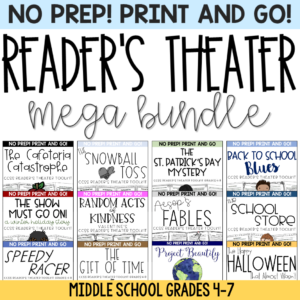
This mini-bundle of scripts and comprehension activities is an easy way to experiment with this learning tool in your class. These scripts are designed primarily for grades 4-6 or for reading intervention at higher grade levels.
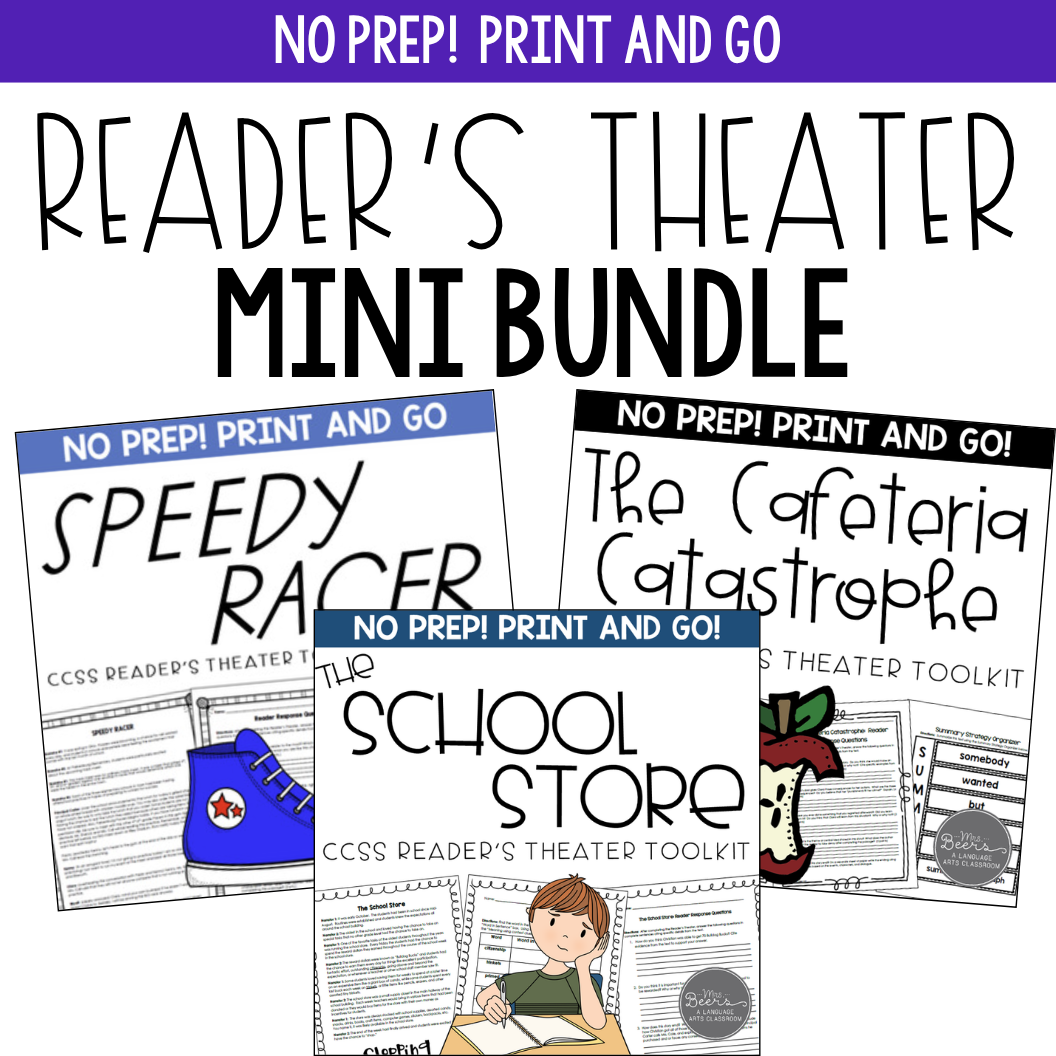
You will quickly find that reader’s theater is a versatile tool that engages your students, enhances fluency, and strengthens reading comprehension. The best part is that your students will enjoy this activity. If your students are like mine, they will soon be begging you to include it regularly!