Red Kayak by Priscilla Cummings is a staple in my 7th-grade ELA curriculum. This is a book we cover through both traditional novel study activities and daily read-alouds in the classroom. It is fast-paced, the moral stakes are real, and your students will be talking about it long after the last page. It is an IDEAL choice for teaching suspense, point of view, and ethical decision-making in grades 5 through 8.
Emergency ELA Sub Plans
🎁 Join my email list for a free set of my ELA Sub Plans!
I want to share how I use this novel in my ELA classroom and how I created my novel study to go beyond just reading comprehension.
Why Red Kayak Works in a Middle School ELA Classroom
Brady Parks is a typical 8th-grade kid living near the Corsica River in Maryland. He has two best friends, a family that loves him, and a pretty predictable life, until one decision by his friends changes everything. The novel follows Brady as he wrestles with what he knows, what he should do, and what he can live with. It is exactly the kind of story that pulls middle schoolers in because they can picture themselves in Brady's shoes.
From a teaching standpoint, Red Kayak works well in middle school because it works across a range of readers in a mixed-ability classroom. The themes of friendship, grief, loyalty, and moral responsibility give you natural entry points for discussion, journal writing, and character analysis. And the suspense keeps students turning pages even when they “don't like reading.”
The cliff-hanger chapter endings make it a great book to read aloud and build intrigue with students, motivating them to complete their daily reading assignments.
What to Teach Alongside Red Kayak
Character Analysis: Brady, JT, and Digger each respond to the same situation in completely different ways. That contrast is perfect for teaching character motivation and how people reveal themselves under pressure. Having students track each character's choices throughout the novel makes for rich analysis.
Moral Decision Making: This book creates natural moments for engaging classroom discussion. What does Brady owe his friends? What does he owe the truth? These are not easy questions, and middle schoolers will surprise you with what they bring to the conversation. A structured journal prompt or fishbowl discussion after key chapters works well here.
Figurative Language: Cummings uses vivid sensory language throughout, especially in scenes on or near the water. I build figurative language work throughout my novel unit rather than saving it for the end.
Suspense and Pacing: Red Kayak is a strong mentor text for teaching authors' use of suspense and tension. The format is straightforward enough for middle schoolers to study chapter length, sentence structure, and dialogue as tools an author uses to keep readers hooked.
What Is Included in This Red Kayak Novel Study Unit
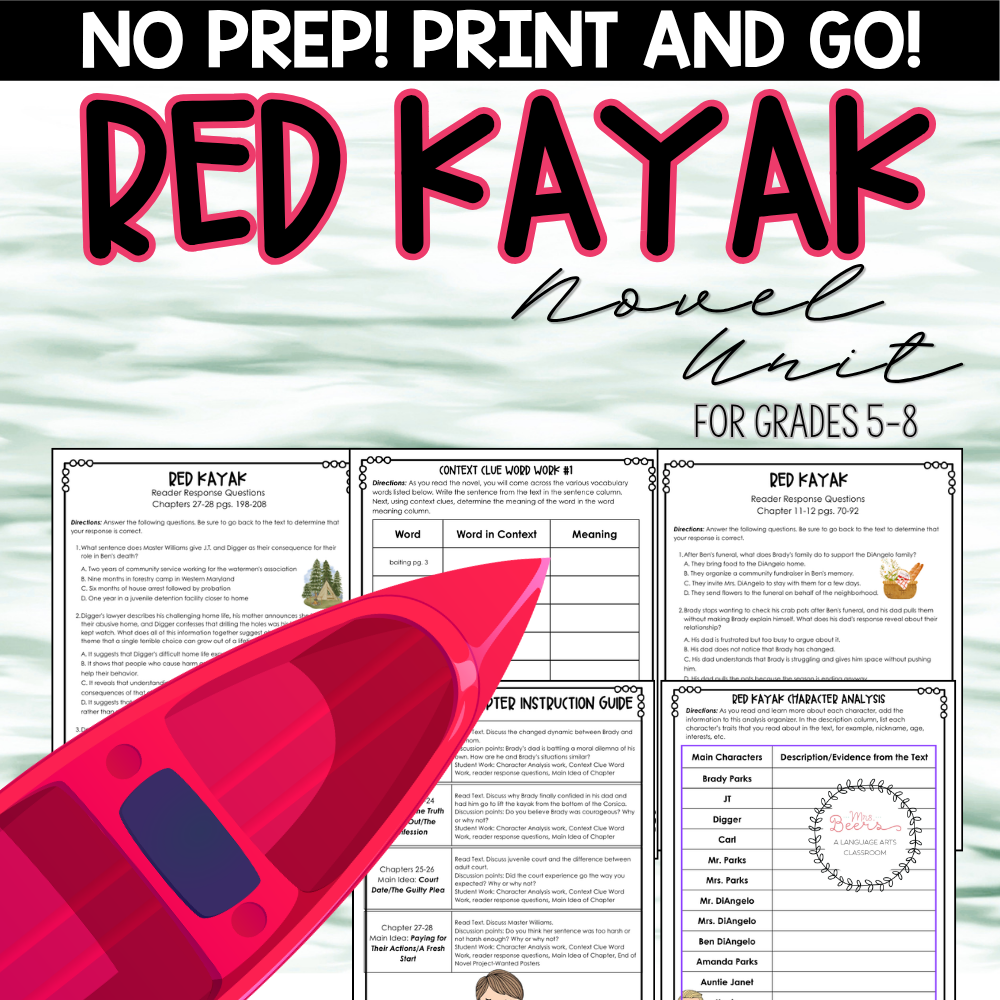
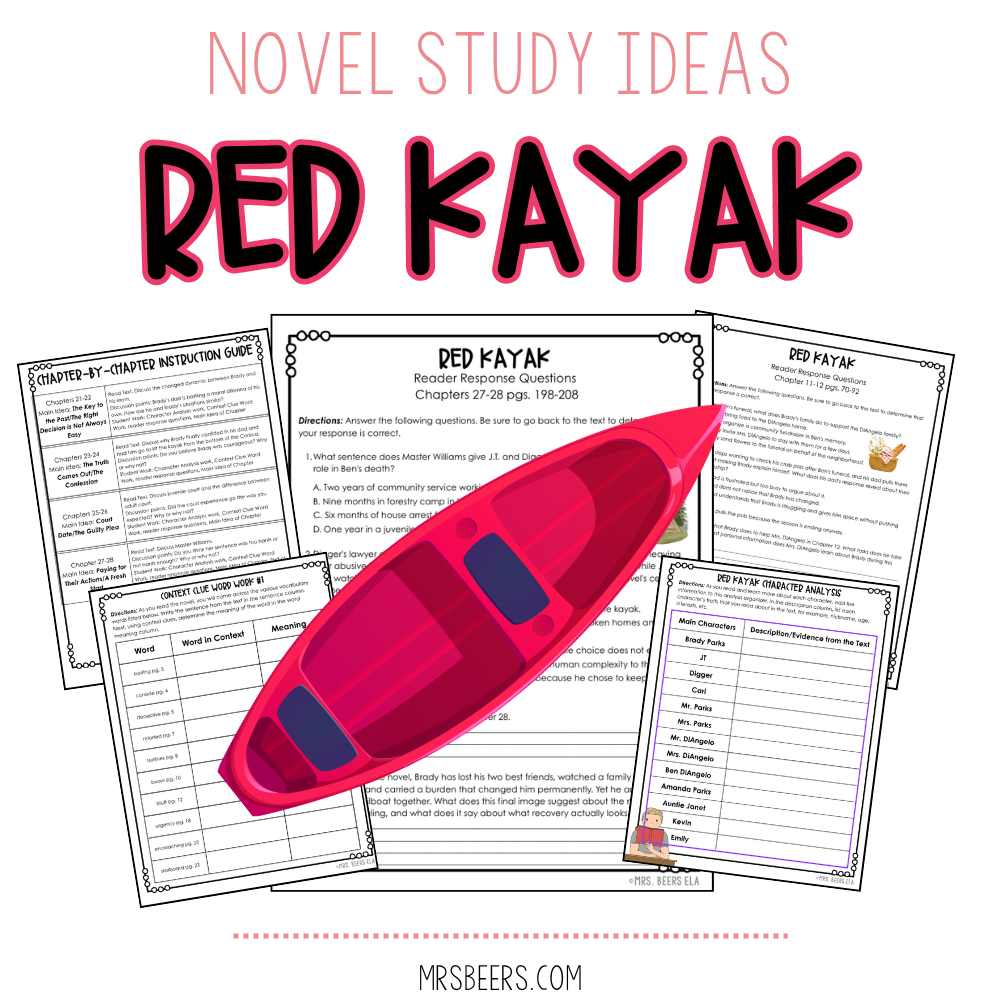
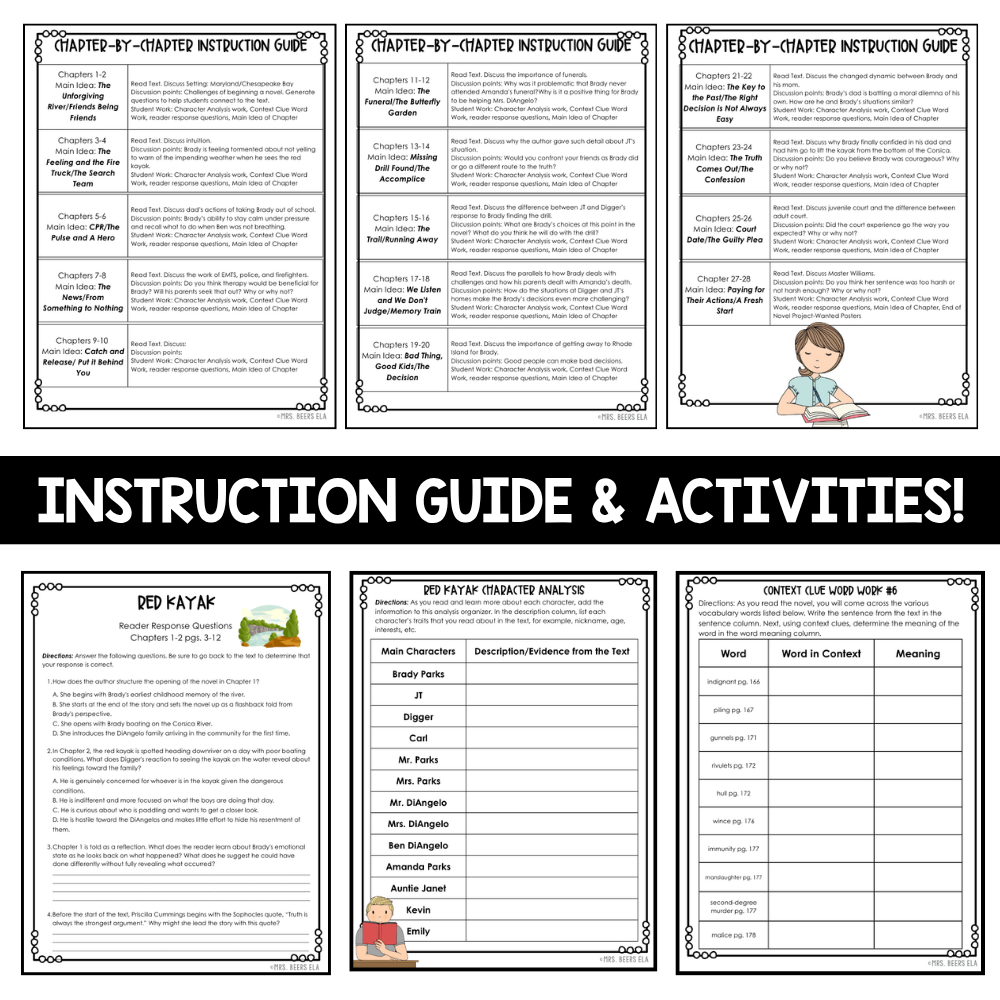
If you want a print-and-go resource that covers this book from start to finish, I have created a complete Red Kayak novel study unit available in my TPT store. It is a full-length PDF with everything you need to guide your class through the novel while covering your reading literature standards. Here is what is included:
- Lesson plans for straightforward teacher instruction
- 14 chapter-by-chapter reader response pages
- 6 pages of context clue vocabulary work
- 2 pages of character analysis activities
- Main idea activity
- Story map worksheet
- Figurative language activity
- 3 journal prompts
- End of novel project
- Answer key
No prep is needed with this unit. In fact, you could probably get away with skimming the book if you wanted, but I think you'll love reading it. You can even repurpose the chapter-by-chapter lesson plans as an outline for your read-aloud questions and discussions.
How Red Kayak Fits Into Your ELA Curriculum
This is a great novel for the second half of the school year when you need a high-engagement text. I have used it as our fiction text for the 3rd quarter before spring break for the past 5 years.
Every single class gets pulled in by Brady's situation and starts asking the same question: What would I do? That kind of genuine engagement is hard to manufacture, and Red Kayak delivers it consistently. If you are looking for a novel that opens up real conversations about friendship, loyalty, and impossible choices, this is it.
One more reason students love this book: the sequels. The Journey Back is written from a different character's perspective, and Cheating for the Chicken Man offers yet another point of view on the same events. My students often vote on which sequel to read next, and I always have a few who add both to their summer reading lists.
I hope your students love this one as much as mine do!