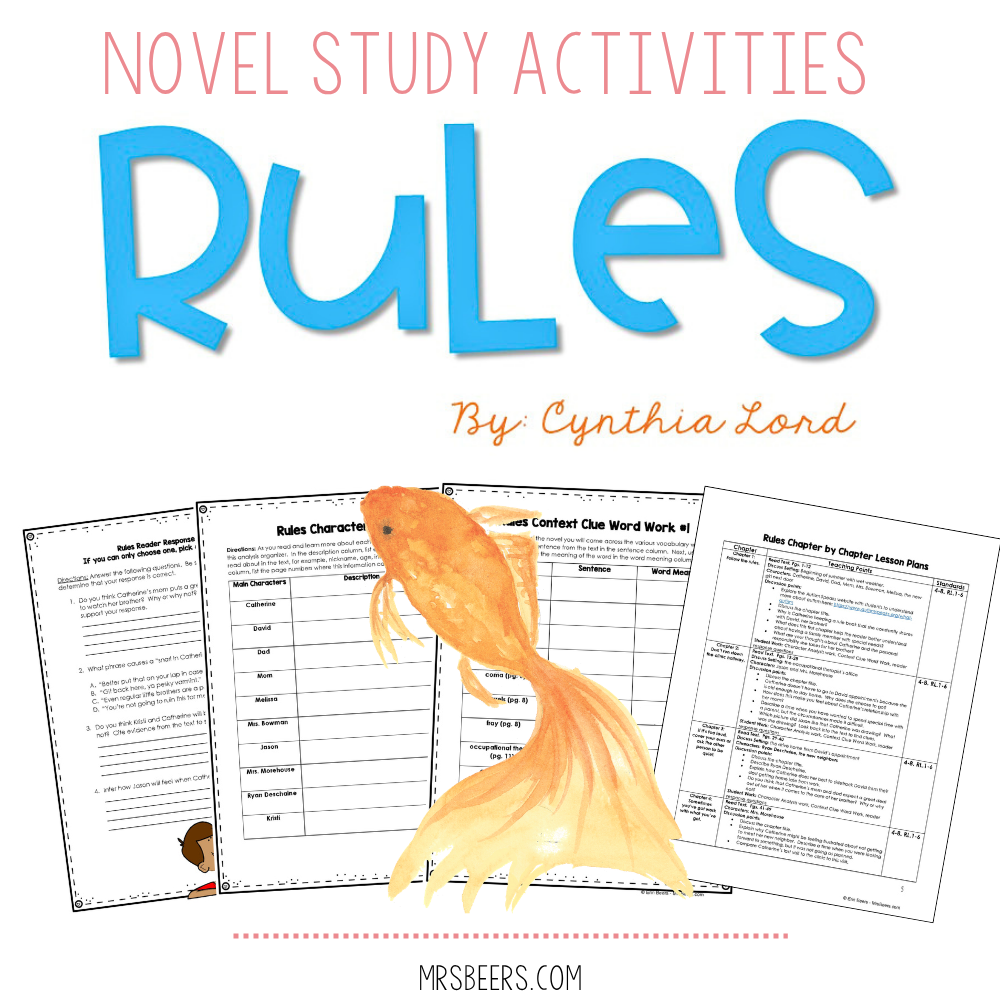
Rules by Cynthia Lord is a novel that will make students genuinely think about how they treat people. I have watched many middle schoolers connect with this book, make arguments about what Catherine should have done, and then change their minds by the end. That type of engagement is hard to find with this age group!
Emergency ELA Sub Plans
🎁 Join my email list for a free set of my ELA Sub Plans!
If you are teaching Rules by Cynthia Lord and want a complete, structured approach, here is everything I use with my middle school students.
Why Rules by Cynthia Lord Works for Middle School
The novel follows Catherine, a 12-year-old girl who creates a rulebook to help her younger brother, David, navigate daily life. David is autistic, and Catherine is the kind of big sister who is constantly managing, explaining, and quietly struggling. Her summer takes an unexpected turn when she meets Jason, a boy who uses a communication device to speak, and Kristi, a new neighbor she desperately wants to impress.
What makes this book such a strong classroom text is the layered character work. Catherine is NOT a perfect narrator. She makes choices that your students will want to argue about, which is exactly what you want in a middle school novel. The themes of acceptance, belonging, and the gap between who we want to be and how we actually act make for rich discussion at this grade level.
It is also a strong inferencing text. The chapter titles are written as rules (“Follow the rules,” “Sometimes people laugh when they like you, but sometimes they laugh to hurt you”), and they require students to think before they understand what each chapter will reveal. I LOVE this structure for discussing inferencing with students who are still developing that skill.
Rules Novel Study: What I Teach Chapter by Chapter
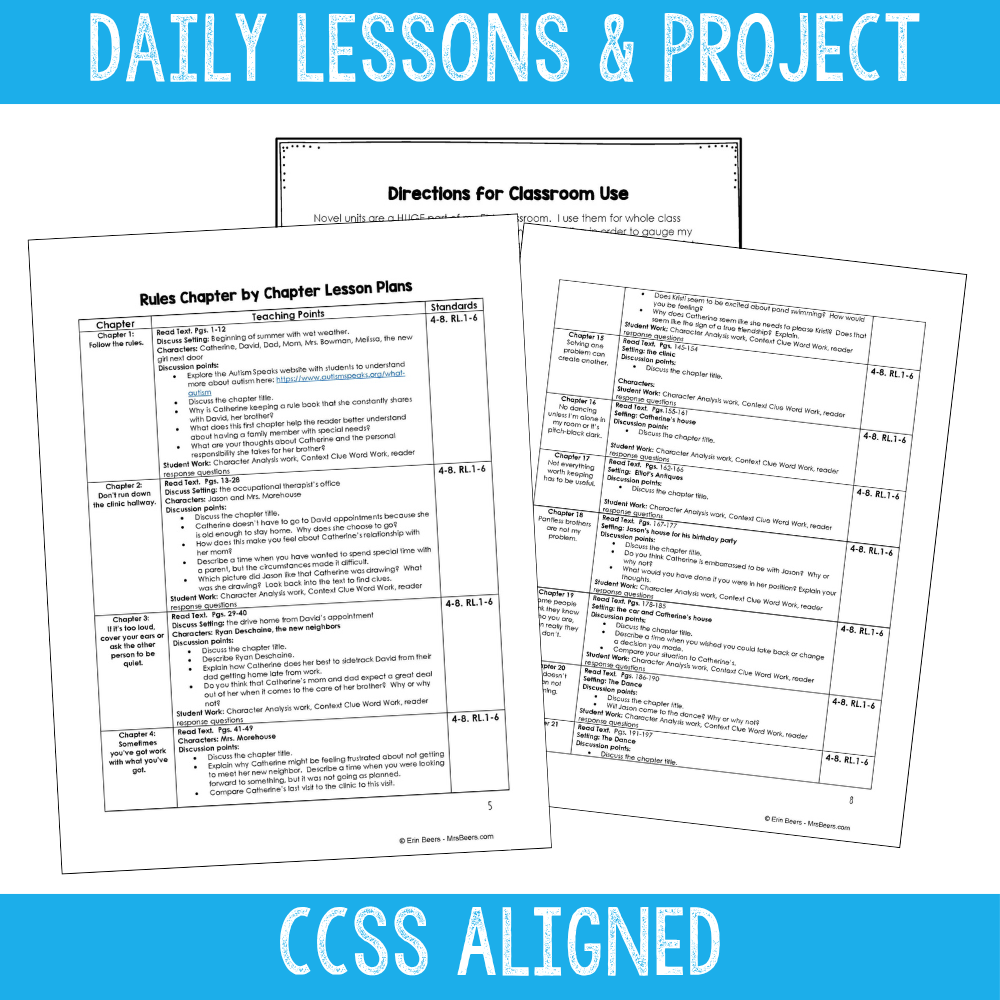
My Rules novel study unit includes 22 chapter-by-chapter lesson plans. Here is an overview of how I approach some of the key moments in the book.
Chapters 1-3: Establishing Catherine's World
The opening chapters introduce students to Catherine's sense of personal responsibility for David, the family dynamic, and the setting of the occupational therapy clinic where so much of the story unfolds. I use these early chapters to anchor character analysis work and get students thinking about the chapter title as a lens for each section.
Discussion questions in my novel unit: What does Catherine's rulebook reveal about her character? Does she take on too much responsibility for David, or is she being a good sister? What do your first impressions tell you about how Catherine sees herself versus how others see her?
Chapters 5-7: The Jason Storyline
This is where the novel starts to get interesting for students. Catherine is creating word cards for Jason, a boy at the clinic who uses an augmentative and alternative communication (AAC) device. Students who do not already know what AAC devices are are genuinely curious. This creates a learning opportunity to show examples from the Autism Speaks website, so students have more context on both autism and assistive communication before diving deeper.
The word card scenes are excellent for discussing the author's craft: why does Cynthia Lord show us Catherine doing this work rather than just telling us she cares?
Chapters 8-12: The Kristi Conflict
Catherine's friendship with Kristi puts her in an uncomfortable position. Students see her hiding Jason from Kristi, downplaying David, and making choices that do not reflect her best self. This is where the inferencing and theme work really open up. Great questions: Is Catherine a good friend? Is she a good sister? Can she be both at the same time?
Chapters 18-22: Resolution and Reflection
The final chapters bring students to the dance scene, Catherine's reckoning with her choices, and a resolution that feels earned without being easy. The closing chapter, where Catherine borrows words from Arnold Lobel, is a beautiful moment for connecting to the theme of using literature to say things we cannot say ourselves — a very natural tie-in for any writing work you are doing in your ELA classroom.
Rules Novel Study Unit: What's Included
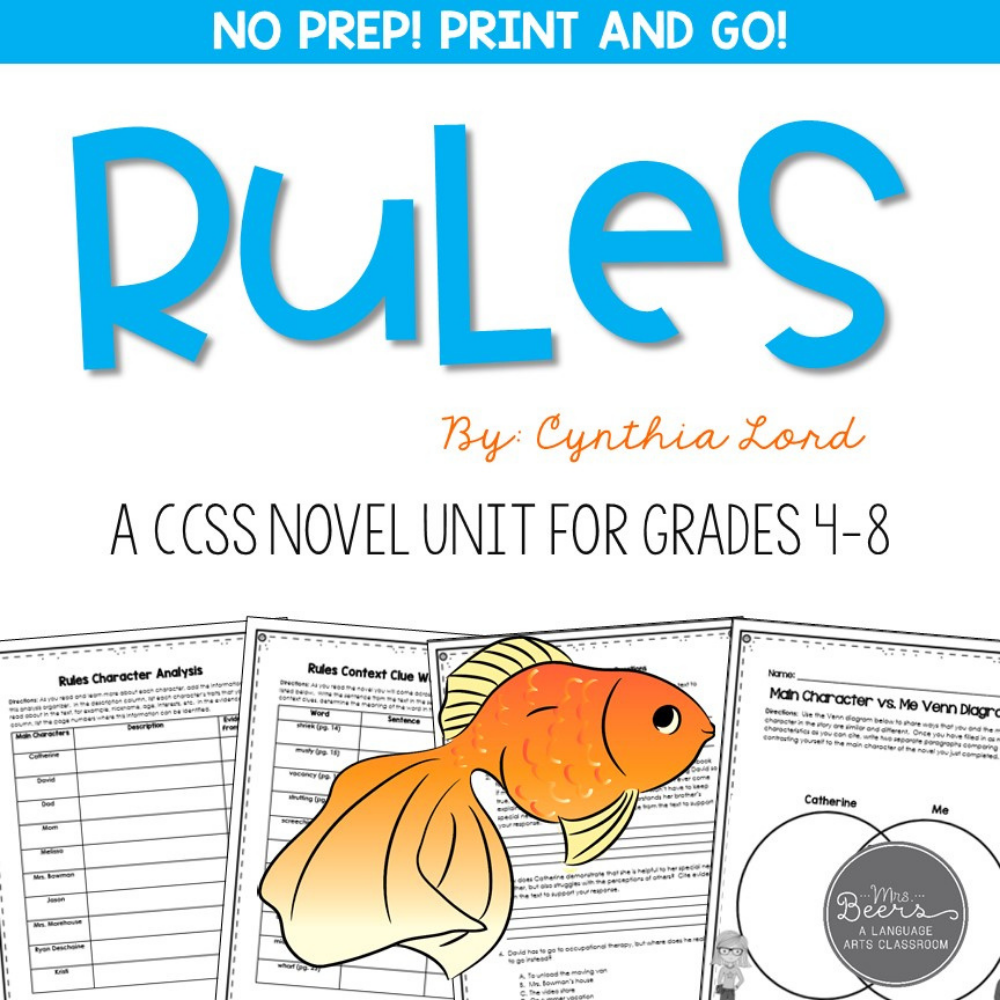
My Rules Novel Study Unit includes everything you need to teach this book from start to finish. Here is what is in the 48-page unit:
- Chapter-by-chapter lesson plans for all 22 chapters
- 17 pages of reader response questions (before, during, and after reading)
- Character analysis activities
- Context clue word work (10 sets)
- Figurative language work, including simile and metaphor activities
- Main idea worksheet
- Story map
- Reflection journal topics
- End of novel project
It is CCSS aligned for grades 4-8 and designed to be a true print-and-go resource. No additional prep work, no hunting down supplemental materials — everything your students need to think deeply about this book is in one place.
Grab the Rules Novel Study Unit from my TPT store here.
Pairing Rules with Other Middle School Novel Studies
Rules fits naturally into a unit on identity, empathy, or belonging. If you are building a novel study sequence or looking for books with thematic connections, here are a few I pair with Rules in my classroom:
- Wonder by R.J. Palacio: another empathy study navigating the line between fitting in and doing the right thing; strong pairing for a bullying or inclusion unit
- Freak the Mighty by Rodman Philbrick: friendship across difference; another book where students must work to understand characters who experience the world differently
- Bud, Not Buddy by Christopher Paul Curtis: empathy and belonging from a different angle; a strong companion for a character resilience unit
If you are looking for complete novel study units for any of those books, I have resources available for all three in my TPT store.
One More Thing Worth Knowing About This Book
I want to be straightforward with you: this is not a book where everything wraps up perfectly. Catherine does not suddenly become a perfect sister or a perfect friend. She grows, but she also makes real mistakes that she does not fully repair by the last page. I think that is one of the things I appreciate most about Cynthia Lord's writing.
Your students will see themselves in Catherine, not because she is easy to like, but because she is genuinely trying and genuinely failing in ways that feel real. That is why this book prompts such great classroom discussions.