Between homework turn-ins, read-aloud chapters, lesson instruction, questions, and discussions, a middle school ELA block disappears FAST.
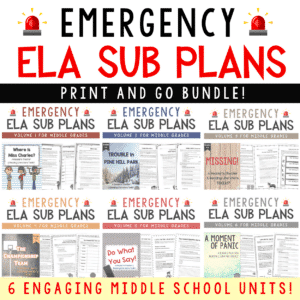
Emergency ELA Sub Plans
🎁 Join my email list for a free set of my ELA Sub Plans!
That’s why it is important to build time-management structures into your classroom routines. Here are 5 ways I help my middle schoolers understand how much time they have and how to use it well, without losing half the period to “wait, what are we doing now?”
1. Display the Full Schedule of Learning
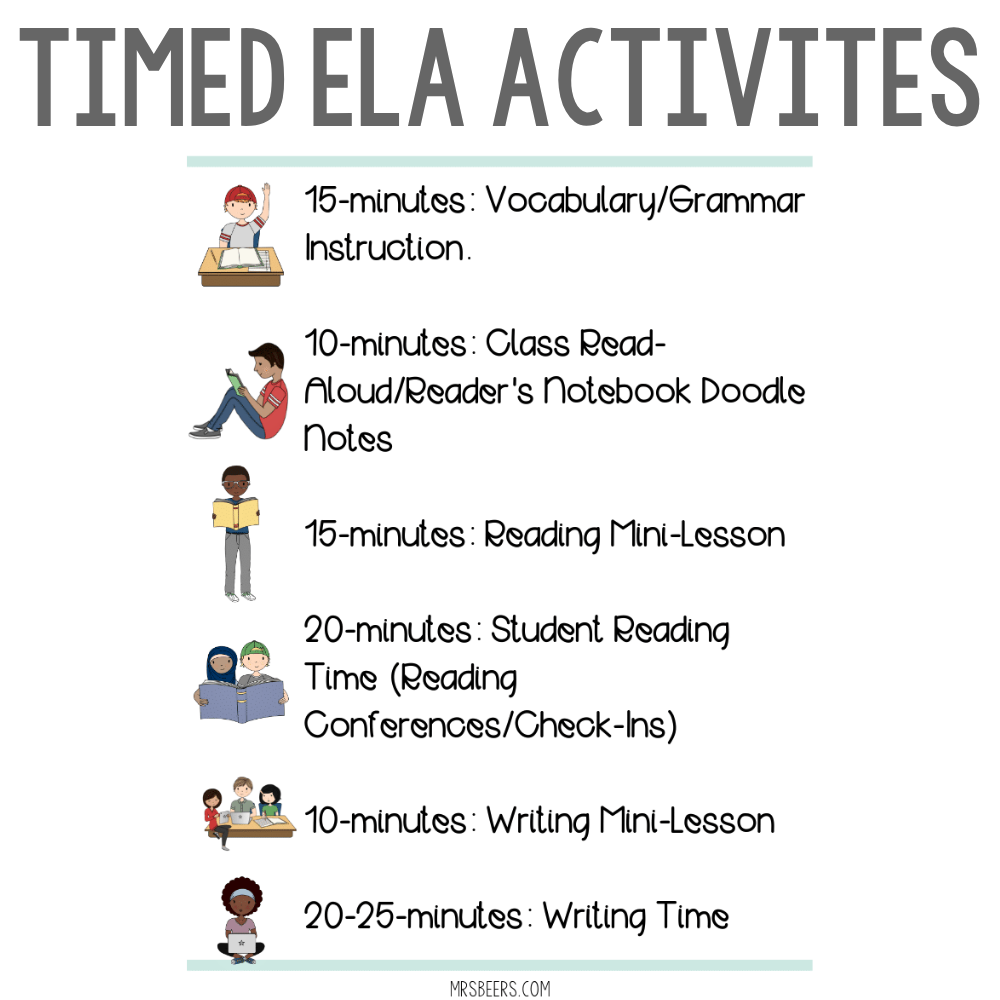
When I tell my students they have 10 minutes for a task, they understand why because I give them our full day of activities right from the start. My Daily Agenda Slides cover everything they need to know at a glance. Students walk in, look at the board, and immediately see the date, what we’re learning, and what supplies they need, with a Question of the Day to get them settled while I take attendance.
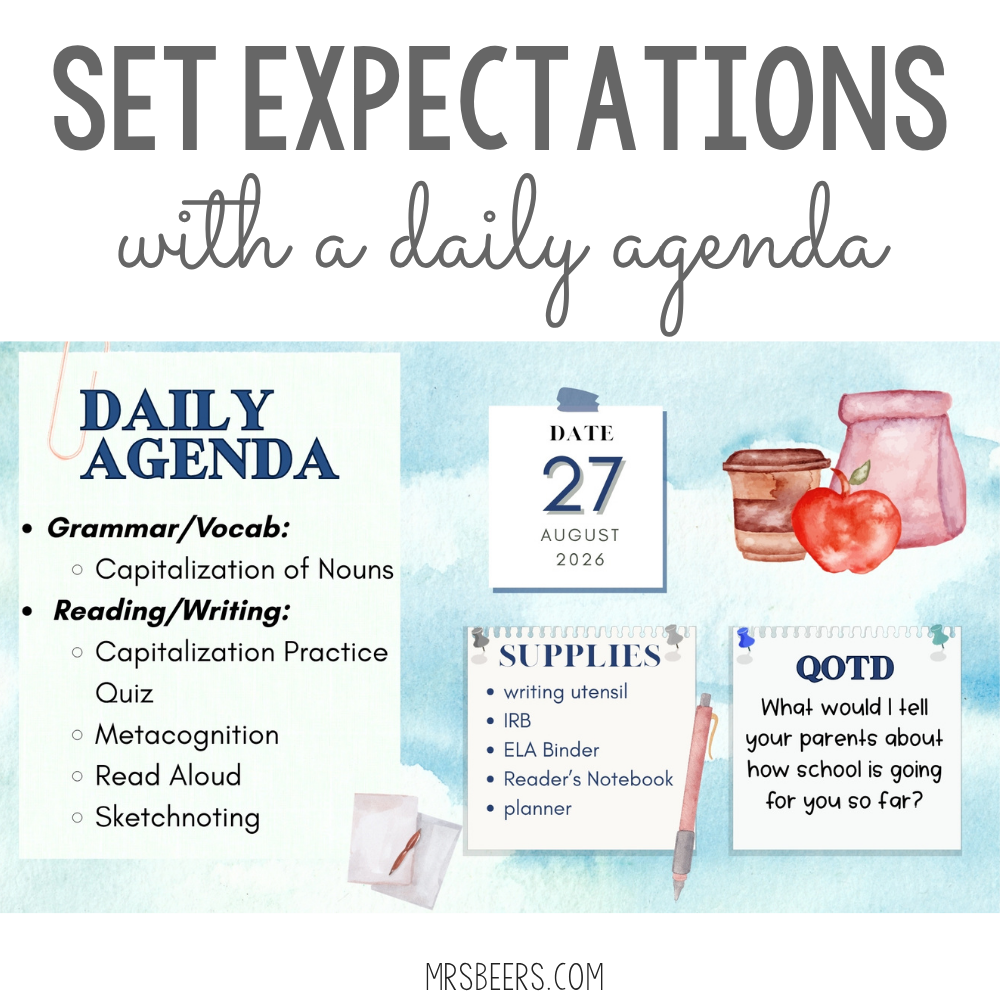
No one has to ask me a single question before we even start, which means none of our instructional time gets eaten up before class begins. I’ve written more about how I use them here.
2. Time Independent Reading to Build Stamina
Independent reading time works best when students know exactly how long they’re expected to read. I start the year with shorter windows, maybe 10 minutes, and build up as my students’ reading stamina grows. A visible timer keeps them honest about that growth. They’re not staring at me, wondering when it ends. They’re watching the clock and pushing themselves to make it to the next checkpoint.
3. Break Writing Workshop Into Visible Chunks
Writing workshop falls apart fast without structure. I break drafting time into chunks: a few minutes to reread yesterday’s work, a solid block to draft, and a few minutes to share with a partner. Displaying each chunk as its own timed segment keeps my writers moving instead of staring at a blank page for the entire period. It also makes it obvious to me, at a glance, which students need a nudge before the timer runs out.
4. Use Timers for Literature Circle and Small Group Rotations
Literature circles and small group rotations only work if they can survive the transitions. I set one timer for discussion time and a second, shorter one for the rotation itself. Groups know they have a firm window to wrap up their conversation and move to the next station, which means I’m not the one chasing down stragglers every few minutes.
5. Teach “Prepare Ahead,” Not “Cram the Night Before”
Time management isn’t only about the classroom clock. Middle schoolers need to learn to plan across days, not just minutes. When I know a quiz is coming on Friday, I talk through what the week needs to look like well before Thursday night. Five minutes before a quiz doesn’t give you the outcome you’re hoping for. I show my students what long-term planning looks like across the week rather than waiting for them to forget and try to cram everything in.
Time Management Is Structure, Not Restriction
Time management in a middle school ELA classroom isn’t about cramming more into one class period. It’s about giving your students the structure to use their minutes well, and eventually, the confidence to manage that structure on their own.
I recently got to talk about this in more depth on Time Timer’s Rethink Time podcast. You can watch the full interview below.
If you’re looking for a print-and-go way to build that structure into every single class period, check out my Daily Agenda Slides in my TPT store. They’re fully editable in Google Slides or Canva, so you can drop in your own plans and have your students walking in ready to go, every single day.